
Texas Heating & Cooling Guide
When your home feels wrong, start with what you can see and feel. Find the right problem guide, compare regional conditions, and know when it is time to call for help.
 THE SYSTEM / THE SEASON / THE ROOM
Start with the symptom, then the system.
This guide helps Texas homeowners describe an HVAC problem before guessing at a repair. Check the thermostat mode, whether air moves, where water or ice appears, and which rooms are affected. Then use the relevant guide and its safe stopping point. Texas weather adds context, but it cannot diagnose your home from a ZIP code.
What is happening in your home?
Pick the observation closest to yours. Each card opens a full Texas problem guide.
Explore Texas by region
Choose a region on the map or the buttons. The information panel and suggested guide update immediately.
Far West
El Paso & the Trans-Pecos
Dryer air and intense summer heat make temperature and airflow useful first observations. Do not equate dryness with a specific equipment fault.
Map silhouette: Mod creator, Wikimedia Commons, CC BY 4.0; homeowner regions are editorial groupings, not county or climate boundaries.

Know your system
The same symptom can mean different things on different equipment. Start by identifying what heats and cools your home.
Central AC + separate heat
Outdoor cooling unit and an indoor blower. Heating may come from a separate furnace. Check the equipment labels rather than assuming.
Heat pump
Moves heat in either direction. Outdoor frost during heating can trigger a defrost cycle; it differs from ice on an indoor coil during cooling.
Furnace or other heat
Fuel type and controls matter. Gas smell or a carbon monoxide alarm needs immediate emergency action.
Simplified system sketches for identification, not wiring or repair instructions.
Texas has more than one HVAC season
Use the season to describe a change, not to assume its cause.
First cooling calls
Notice unfamiliar sounds, indoor airflow and thermostat behavior before sustained summer use.
Heat and comfort
Separate warm air, weak airflow, room imbalance and short cycling into different questions.
Moisture matters
On the Gulf side, track indoor humidity and visible condensate alongside temperature.
Heating identity
Check whether the home uses a heat pump, furnace or other system before interpreting its behavior.
Texas Local Guides
Detailed problem paths with safe checks, region-aware context and a clear point for professional help.

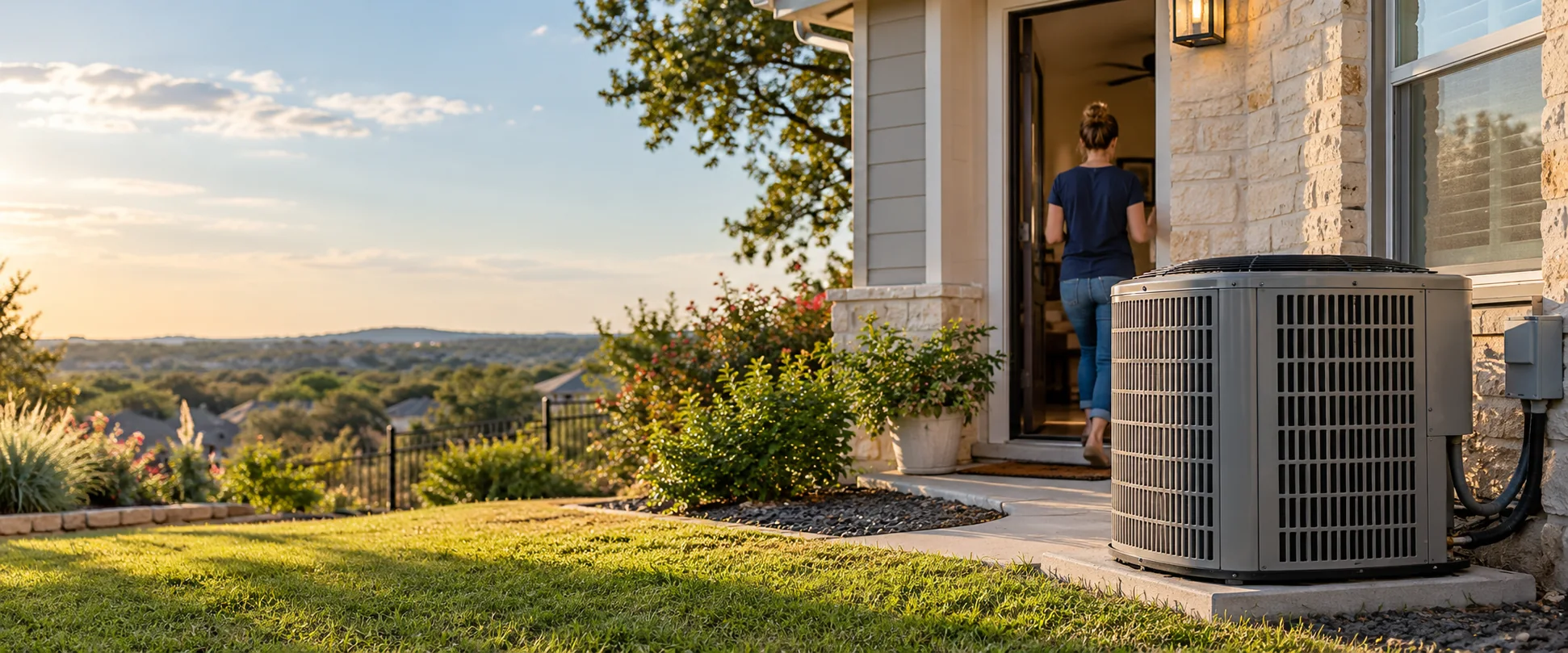
AC Running but Not Cooling Your Texas Home?
The system is running. Why is the house still warm?
Read guide ↗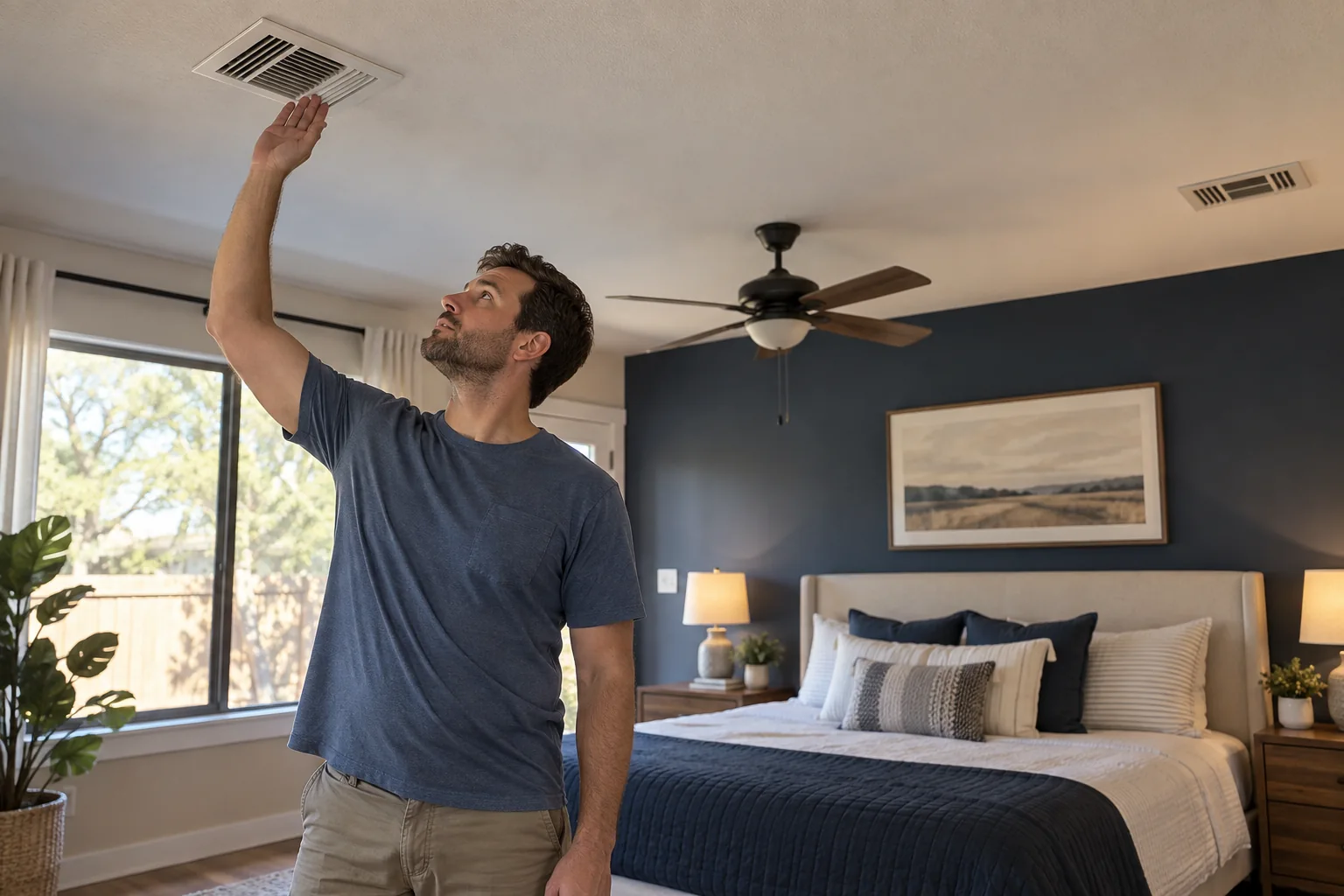
Weak Airflow From Vents in a Texas Home
Is the air weak at one vent or across the whole home?
Read guide ↗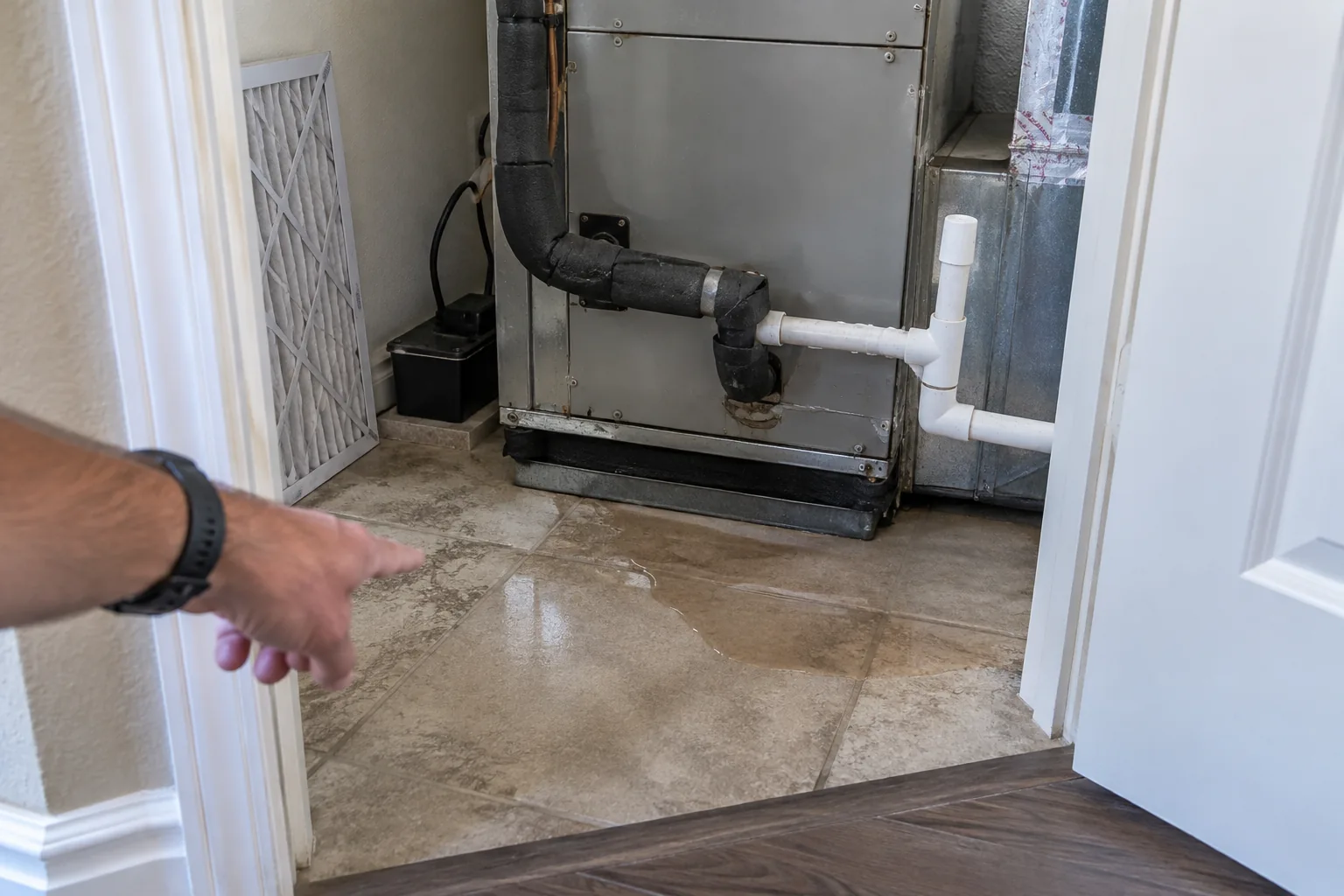
Water Near Your Indoor AC Unit in Texas
Where is the water, and is it close to electricity or finished surfaces?
Read guide ↗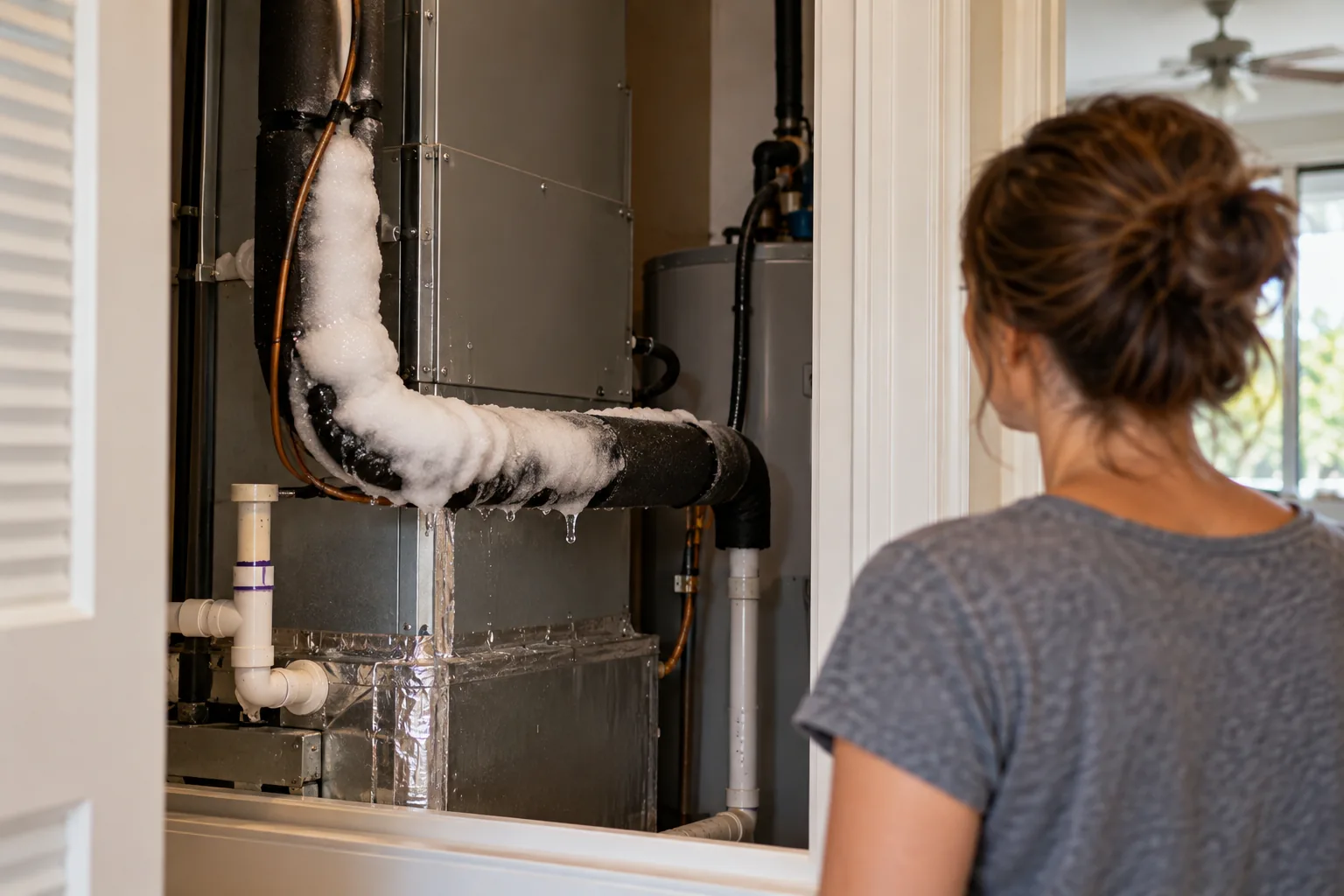
Why Is Your Texas AC Freezing Up?
Do you see ice on a cooling line or indoor coil?
Read guide ↗One question. A useful answer.
Short Texas-context answers for the small choices that come up around a bigger heating or cooling problem.
Explore Local ExplainersKnow when to get help.
Basic observation is useful. Opening panels, working on wiring, refrigerant or combustion systems crosses into professional work.
Check a Texas ACR license with TDLR ↗A few common questions
Is every Texas AC problem caused by heat?
No. Heat can expose a comfort issue, but the same symptom can have several causes. Document air movement, thermostat settings, ice or water, and timing.
Does a region selection mean you serve that area?
No. The map is for explaining regional climate context and choosing reading, not a contractor coverage map.
What if I am unsure whether I have a heat pump?
Check equipment labels or paperwork without opening panels. The system identification panel above gives a starting point; a professional can confirm it.
Reviewed editorial sources: National Weather Service regional climate data, ENERGY STAR heating and cooling guidance, EPA refrigerant rules, CDC carbon monoxide guidance, and Texas TDLR license search. Weather context cannot diagnose a particular home. Sources consulted September 2026. This is general homeowner guidance, not an equipment diagnosis.
Need help with your heating or cooling system?
When basic checks do not answer the question, describe what you observed to an HVAC professional.