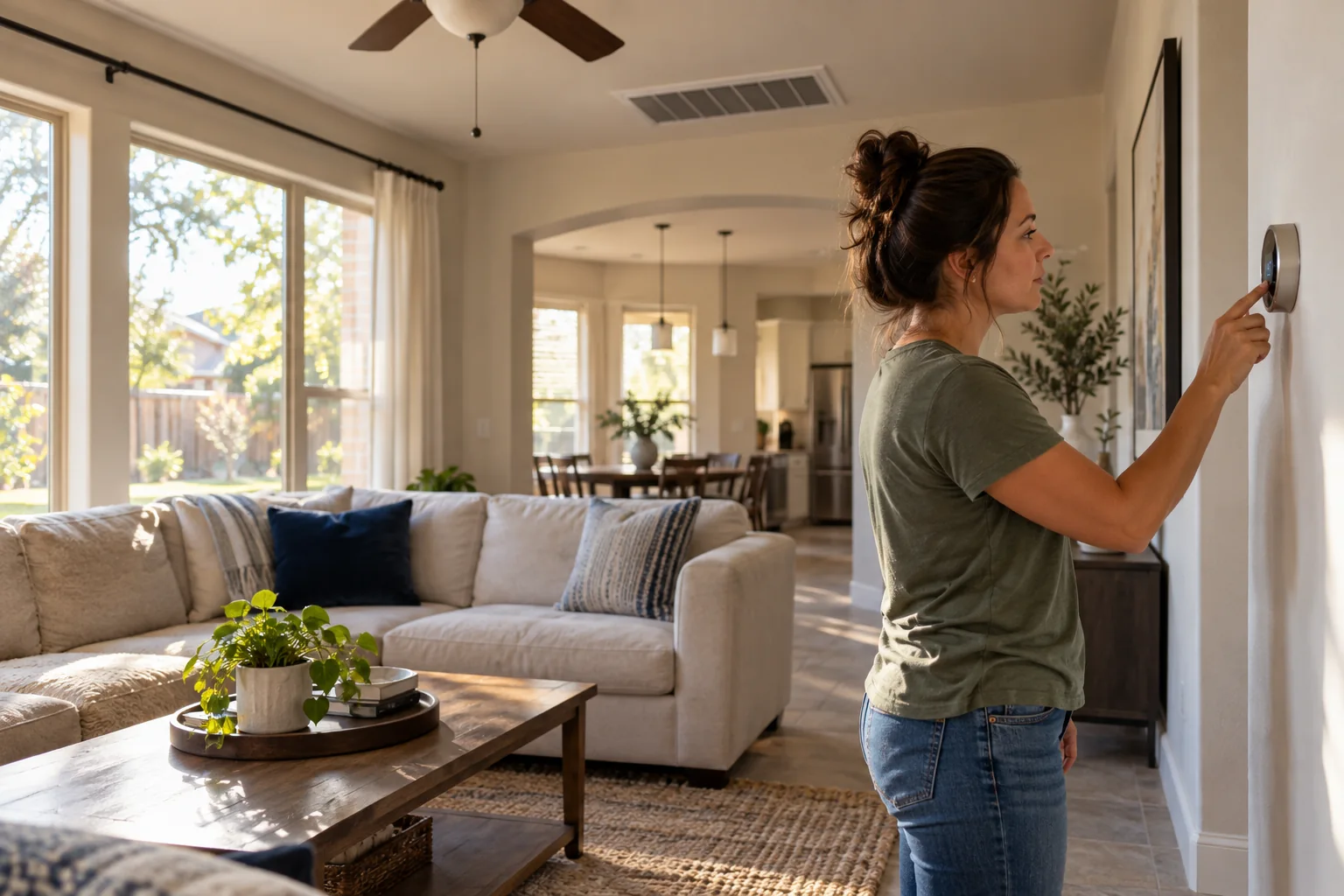
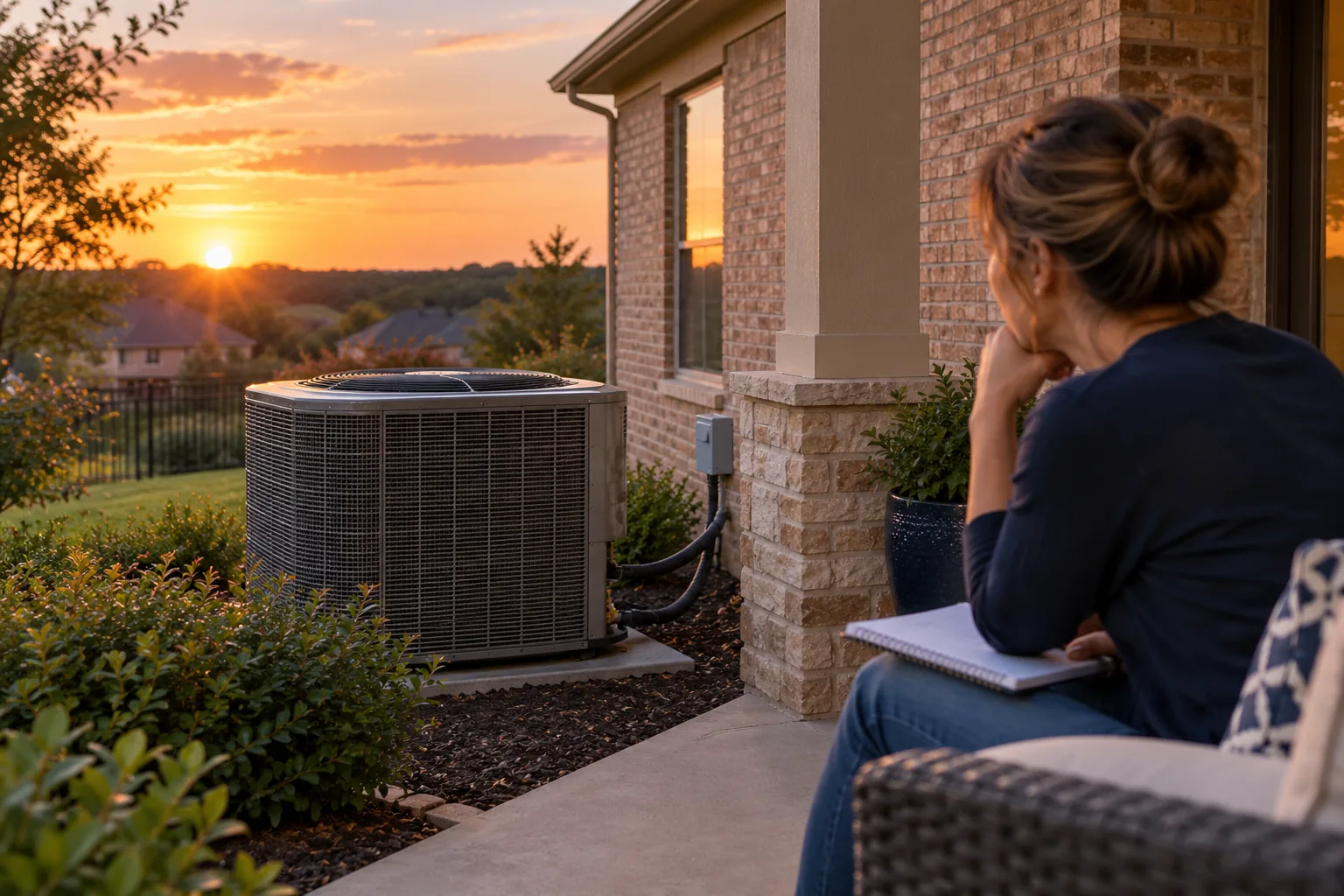
A system that starts and stops repeatedly may not have enough time to reach the thermostat set point. Observe a series of cycles, rather than timing one start. Equipment type, thermostat delays and weather all change what a normal cycle looks like; there is no single minute threshold for every home.
Three useful first checks
- 01Note the set point, room reading and approximate start/stop pattern.
- 02Check whether the thermostat is near a heat source or direct sun.
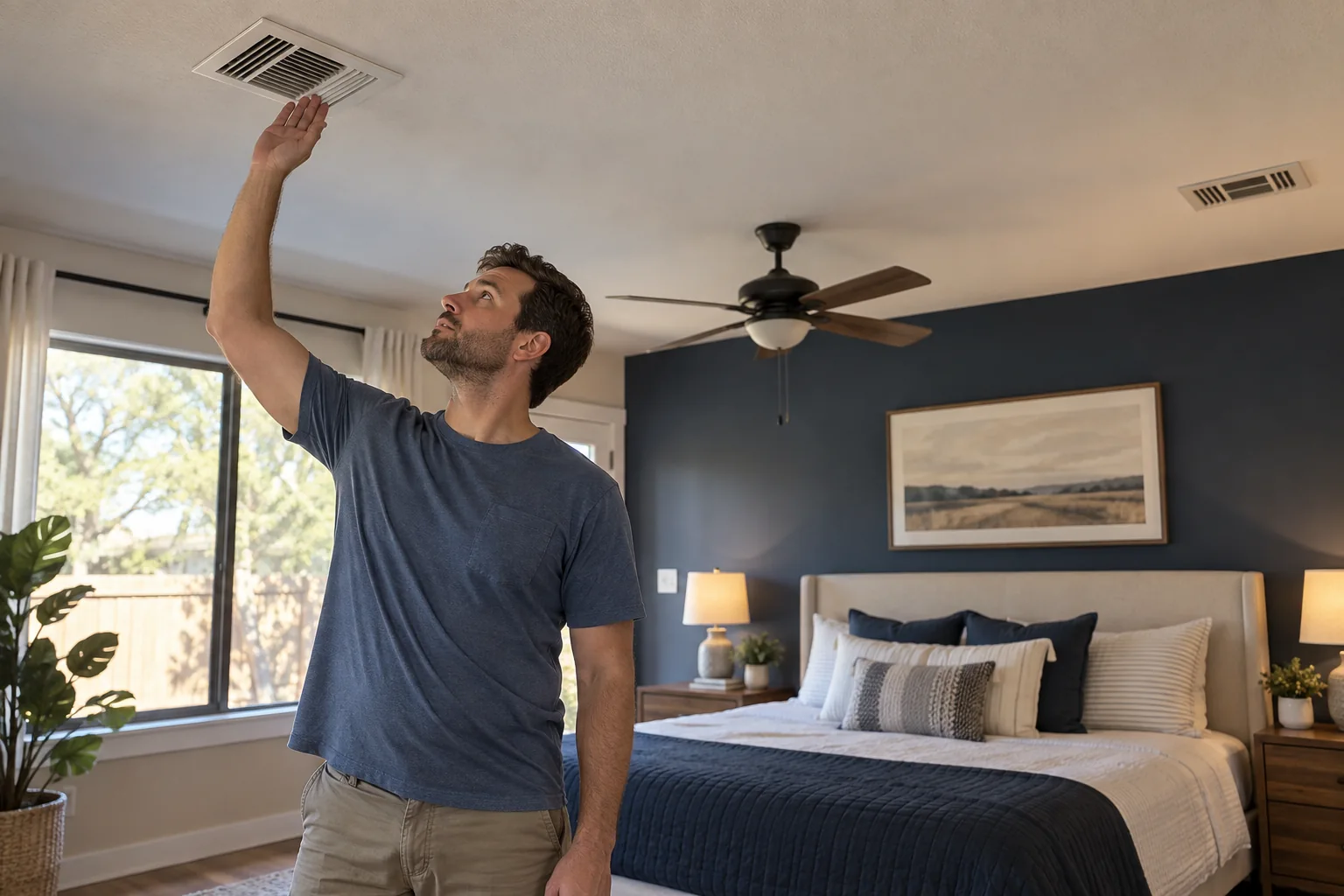
- 03Look for filter and airflow issues you can safely observe.
What are you seeing?
Observe several cycles
Use these branches to describe what you see. They are not a component diagnosis.
Stops before set point
Document the behavior and request evaluation.
Restarts after a brief delay
Check system instructions for thermostat protection delay.
Cycles with poor airflow
Read the airflow guide and note any ice.
Observation route only. It does not identify a component or authorize a repair.
What the season and place can tell you
Frequent cycling during a Texas heat wave is worth documenting, but outside temperature alone does not establish a cause.
If rooms also feel clammy, record that separately; short runtime can affect moisture removal.
Explore the statewide region map ↗Where the homeowner checks end
Call when cycling persists, comfort deteriorates, a breaker trips, or the equipment shows ice or water.
Sources & review
Homeowner checks follow ENERGY STAR guidance. Texas regional context is drawn from National Weather Service climate records. A qualified Texas air conditioning and refrigeration contractor can be checked in the TDLR license search. Sources consulted September 2026. This is general homeowner guidance, not an equipment diagnosis.