
Roof Storm Damage? What to Check From a Safe Location
After hail, heavy rain, falling debris, or severe wind, inspect from the ground and indoors rather than climbing onto a damaged roof.
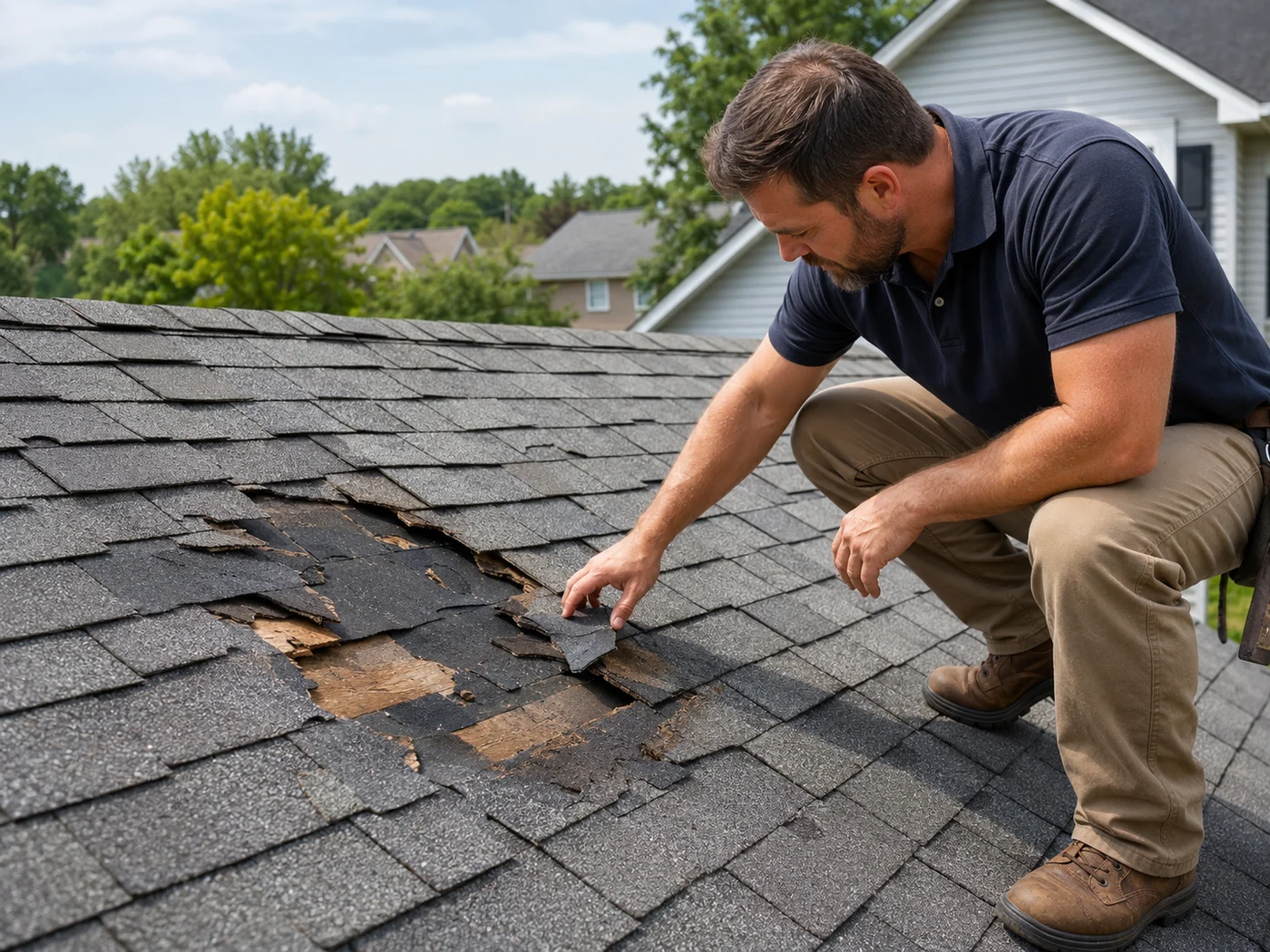 Roofing
Storm damage can involve shingles, flashing, vents, roof edges, decking, gutters, or impact from branches. Some damage is obvious, while smaller openings may first appear as indoor moisture. A damaged roof can also be slippery or structurally unsafe.
What You Can Check
These are basic observations or simple checks. If anything feels unsafe or uncertain, stop and seek appropriate professional help.
- From the ground or a safe window, look for missing, lifted, cracked, or displaced roofing material.
- Check ceilings and accessible attic areas for new stains or active water without walking on wet or damaged surfaces.
- Photograph visible damage from a safe location and note the date and type of storm.
- Keep people away from fallen branches, hanging debris, or areas below visibly damaged roof sections.
Warning Signs
- Sagging roof or ceiling areas.
- Active water near lights, outlets, or electrical equipment.
- A tree, large branch, or utility line has struck the home.
- Large openings, widespread missing roofing, or falling materials.
When Professional Help May Make Sense
A qualified roofing professional should inspect storm damage that cannot be evaluated safely from the ground, especially when water is entering the home or roofing materials have been displaced. Temporary coverings should not replace permanent repair.
Call for Roofing Help
If this issue needs professional attention, use the matching Roofing connection below.
Call for Roofing HelpConnection availability can vary by location, routing availability, campaign conditions, and provider participation.What to Have Ready Before You Call
- Date and type of storm.
- Ground-level photos of visible damage.
- Location of any indoor stain or leak.
- Approximate roof age and any prior repairs if known.