
Strange HVAC Odor? What to Notice Before You Call
A new smell from the HVAC system can be related to dust, a dirty filter, moisture, electrical overheating, or another system issue. Some odors require immediate caution.
 Heating & Cooling
Odors are useful clues, but they are not a safe way to diagnose internal HVAC components. A brief dusty smell at seasonal startup can differ from a persistent musty, burning, electrical, chemical, or gas-like odor. Focus on duration, location, and whether the system is operating normally.
What You Can Check
These are basic observations or simple checks. If anything feels unsafe or uncertain, stop and seek appropriate professional help.
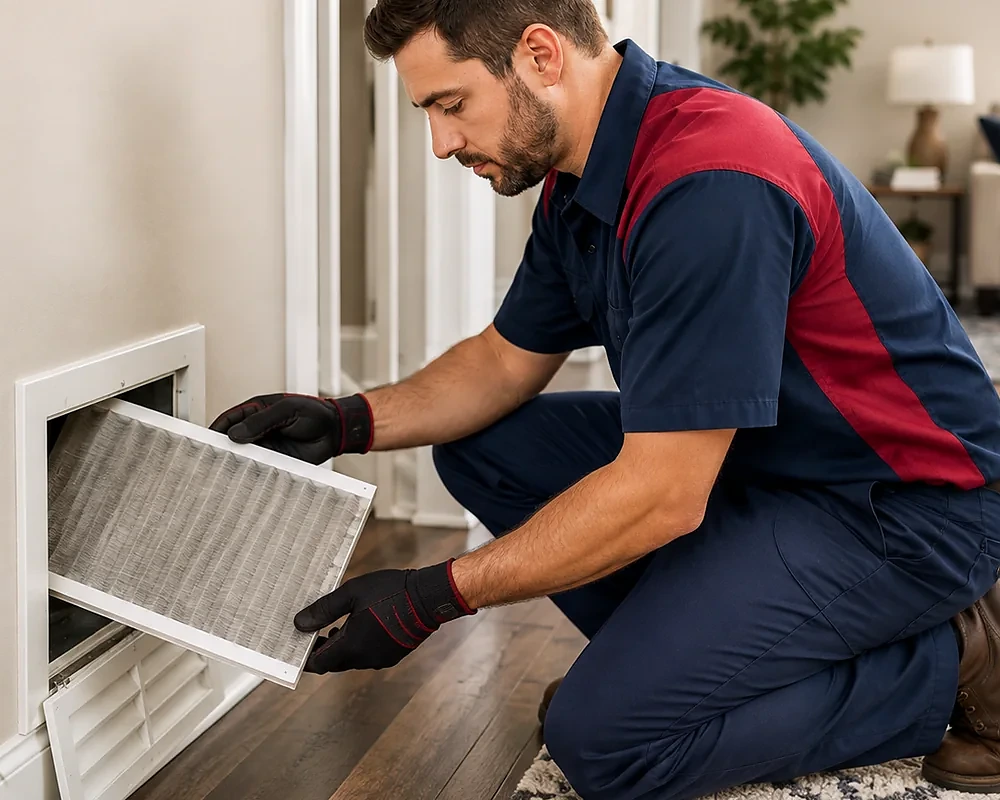
- Check the air filter and replace it if it is visibly dirty or due for replacement.
- Note whether the odor comes from one vent, many vents, or directly from the equipment area.
- Notice whether the smell occurs only at startup or continues while the system runs.
- Look for visible moisture or staining near accessible vents without opening equipment.
Warning Signs
- Natural-gas odor or suspected gas leak.
- Burning plastic, hot electrical, or smoke-like odor.
- Visible smoke, sparks, scorching, or repeated breaker trips.
- Persistent musty odor accompanied by visible moisture or water damage.
When Professional Help May Make Sense
Persistent or strong odors should be evaluated by a qualified HVAC professional, especially when they are associated with moisture, overheating, electrical symptoms, or poor system performance. Leave the area for a suspected gas leak and contact the gas utility or emergency service from outside.
Call for HVAC Help
If this issue needs professional attention, use the matching Heating & Cooling connection below.
Call for HVAC HelpConnection availability can vary by location, routing availability, campaign conditions, and provider participation.What to Have Ready Before You Call
- How you would describe the odor.
- Where it is strongest.
- When it first appeared and how long it lasts.
- Any related moisture, smoke, sound, temperature, or system-performance change.