Heating & Cooling Guide
Thermostat Problems: What Homeowners Can Check First
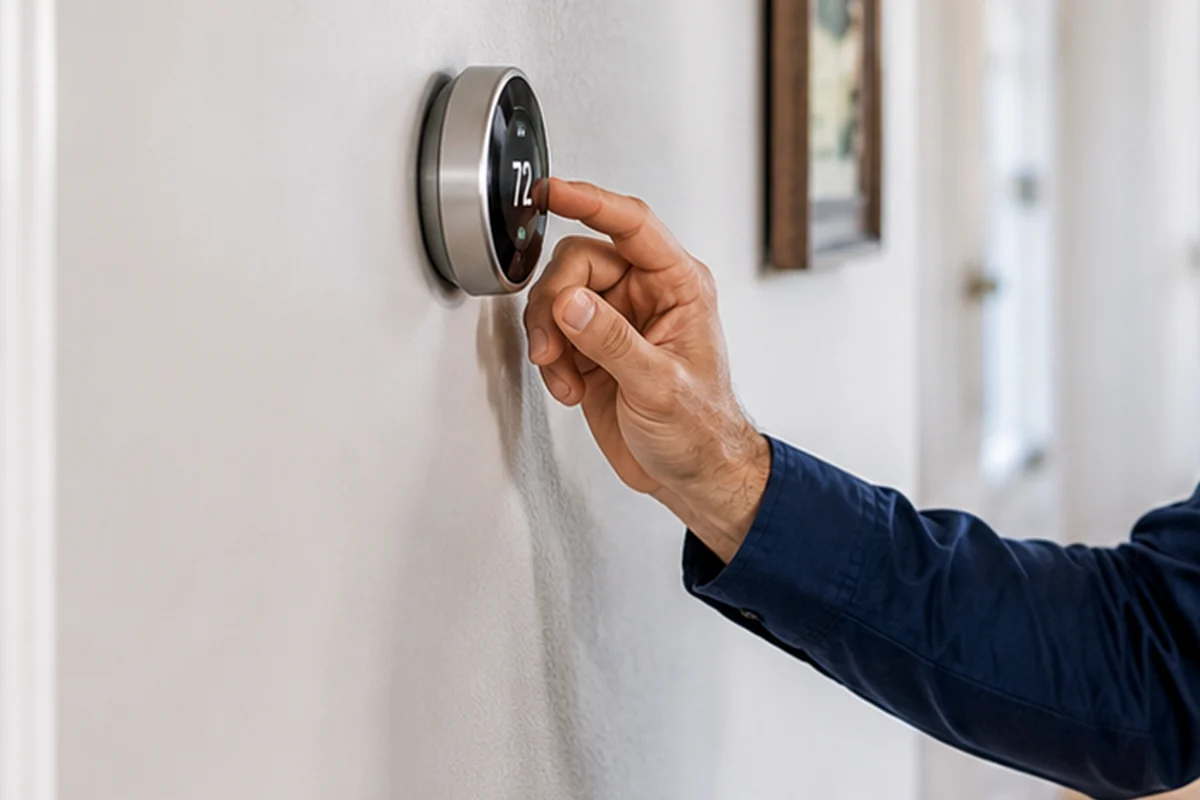
When heating or cooling does not respond as expected, the thermostat is a useful place to start.
 Heating & Cooling
Overview
A thermostat issue can involve settings, batteries, power, scheduling, placement, or communication with the HVAC equipment.
Start here
What You Can Check
These are basic observations or simple checks. If anything feels unsafe or uncertain, stop and seek appropriate professional help.
- Confirm the mode and temperature setting.
- Replace batteries if your thermostat uses them.
- Check whether a schedule is overriding your setting.
- Make sure the thermostat display is on and readable.
Pay attention
Warning Signs
- Sparks, burning smell, or exposed wiring.
- Breaker repeatedly trips.
- System runs continuously despite normal settings.
Next step
When Professional Help May Make Sense
If settings and batteries look normal but the equipment does not respond, professional diagnosis may be appropriate.
Need HVAC help?
Call for HVAC Help
If this issue needs professional attention, use the matching Heating & Cooling connection below.
Call for HVAC HelpConnection availability can vary by location, routing availability, campaign conditions, and provider participation.Be prepared
What to Have Ready Before You Call
- Thermostat model.
- Current settings.
- What the display shows.
- Whether the HVAC equipment starts at all.
This content provides general homeowner guidance and is not a diagnosis of a specific home problem. For urgent, dangerous, or uncertain situations, contact an appropriate qualified professional or emergency service.