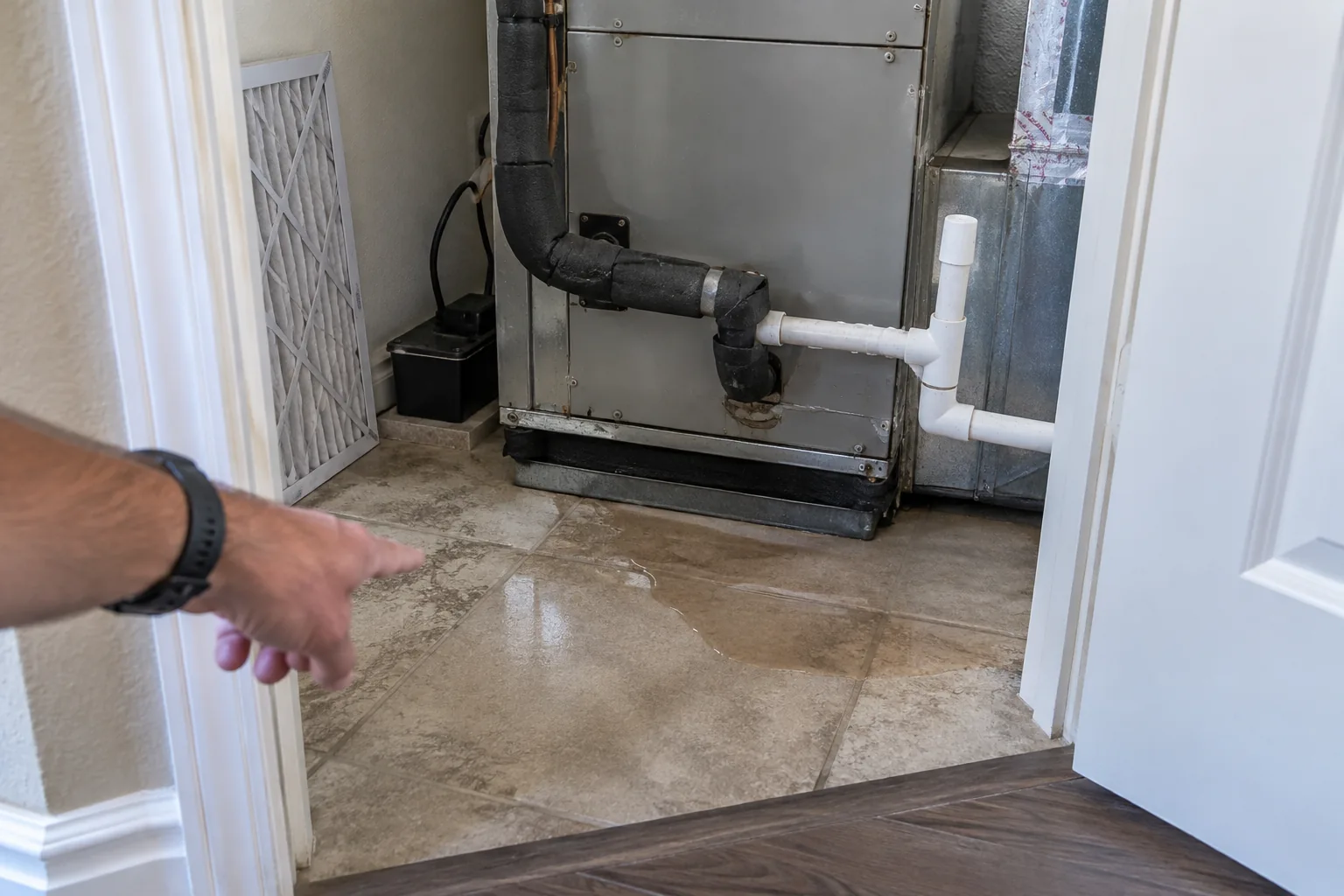

Cooling and moisture removal are related, but they are not identical. Record the indoor reading and how the system cycles, then look for indoor moisture sources such as cooking, showers, leaks and ventilation. A humidity reading is more useful than relying on comfort alone.
Three useful first checks
- 01Use a reliable indoor humidity reading and note time and room.
- 02Look for visible water, damp surfaces and exhaust fans left off during moisture-producing activities.
- 03Observe whether the AC runs in short bursts or the fan is set to ON continuously.
What are you seeing?
Track two readings
Use these branches to describe what you see. They are not a component diagnosis.
Clammy with short cycles
Record cycles and read the short-cycling guide.
Fan set to ON
Read the fan AUTO vs ON explainer for the tradeoff.
Visible dampness or water
Investigate the water source and use the indoor-water guide.
Observation route only. It does not identify a component or authorize a repair.
What the season and place can tell you
Gulf Coast moisture makes this especially relevant, while a dry El Paso home may have a different comfort complaint.
Regional climate frames the question; it does not diagnose equipment size, charge or a duct leak.
Explore the statewide region map ↗Where the homeowner checks end
Seek evaluation for persistent high humidity, recurring dampness, condensation or discomfort despite basic moisture control.
Sources & review
Homeowner checks follow ENERGY STAR guidance. Texas regional context is drawn from National Weather Service climate records. A qualified Texas air conditioning and refrigeration contractor can be checked in the TDLR license search. Sources consulted September 2026. This is general homeowner guidance, not an equipment diagnosis.