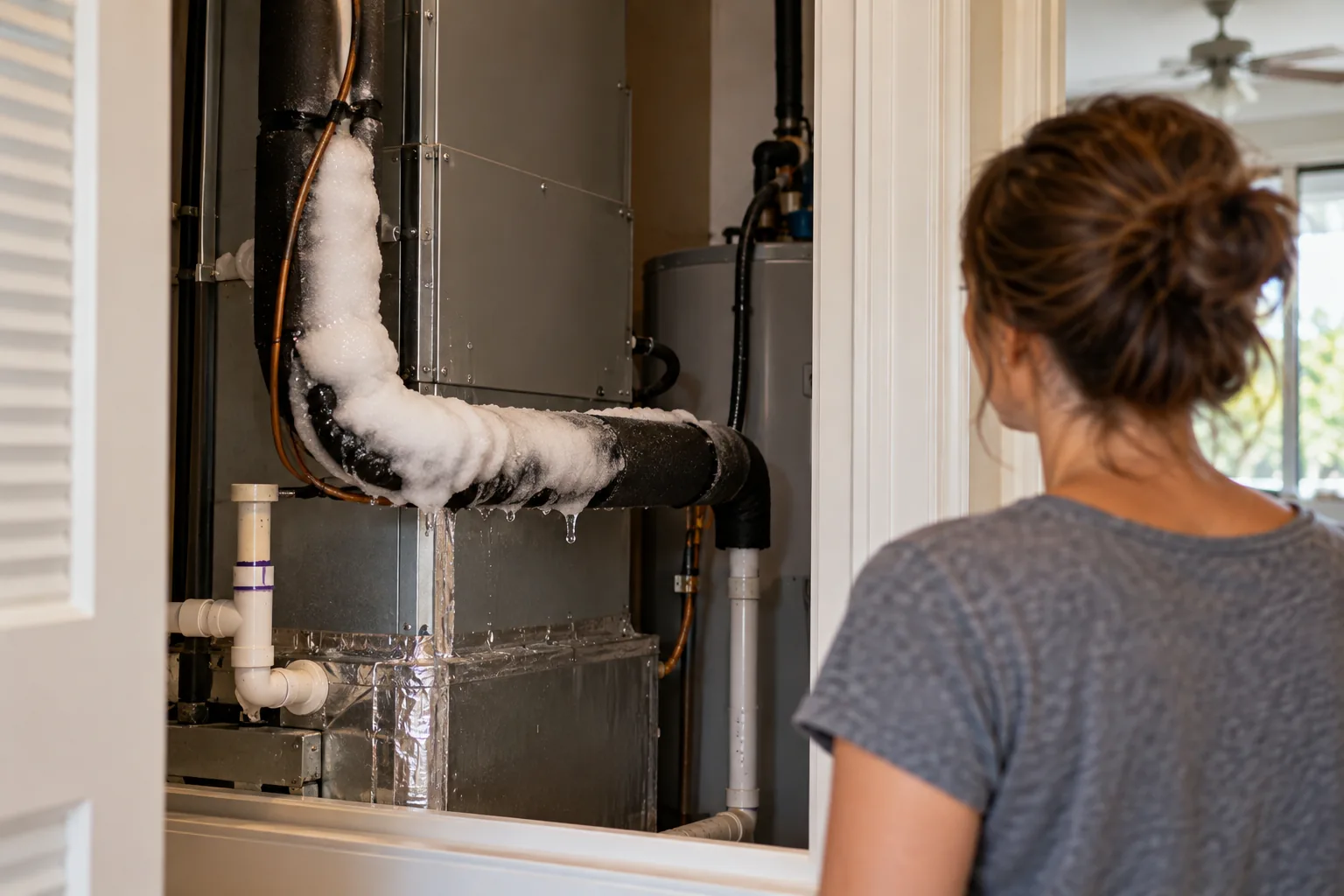
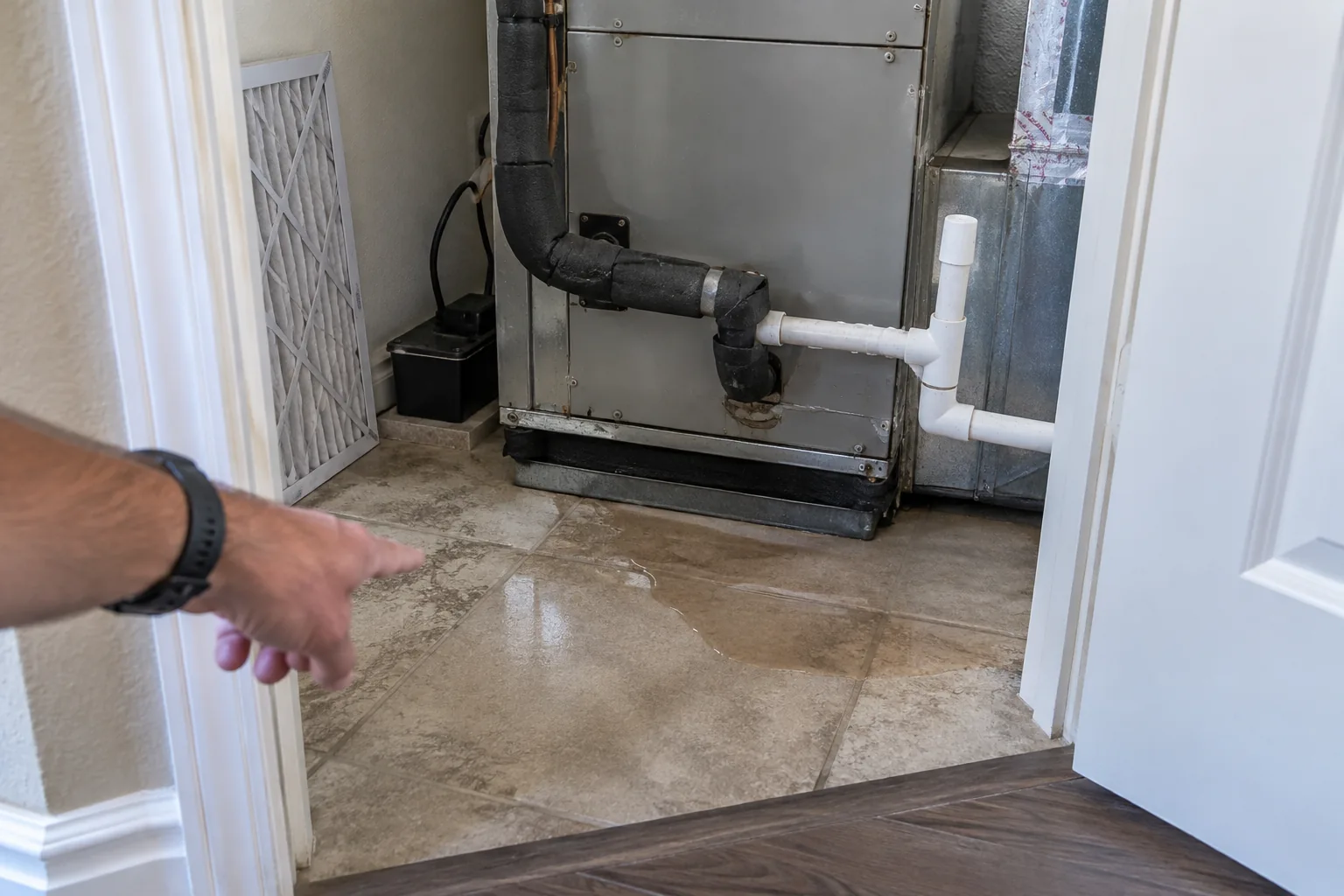
First distinguish an indoor-unit puddle from water at a vent or an exterior drain outlet. Condensation is part of cooling, but water on a floor or ceiling deserves attention. Keep clear of wet electrical parts and protect the area from further damage.
Three useful first checks
- 01Photograph the water location and note whether cooling is running.
- 02Keep people away from wet electrical components; do not remove panels.
- 03Check whether there is visible ice, because melting ice can resemble a drain problem.
What are you seeing?
Locate the water before naming a cause
Use these branches to describe what you see. They are not a component diagnosis.
Water at indoor equipment
Protect the area, turn cooling off if water threatens wiring or ceilings, and seek help.
Water at a ceiling vent
Document the vent and surrounding surface; the source may differ from a unit drain.
Ice is melting
Use the frozen AC route and avoid restarting repeatedly.
Observation route only. It does not identify a component or authorize a repair.
What the season and place can tell you
Humid weather can increase condensate; it does not make an indoor leak normal.
The Gulf Coast and inland Texas differ in moisture conditions, but the leak location is still the first useful observation.
Explore the statewide region map ↗Where the homeowner checks end
Call promptly for water near wiring, a ceiling stain, repeated puddles or a system that cannot drain normally.
Sources & review
Homeowner checks follow ENERGY STAR guidance. Texas regional context is drawn from National Weather Service climate records. A qualified Texas air conditioning and refrigeration contractor can be checked in the TDLR license search. Sources consulted September 2026. This is general homeowner guidance, not an equipment diagnosis.