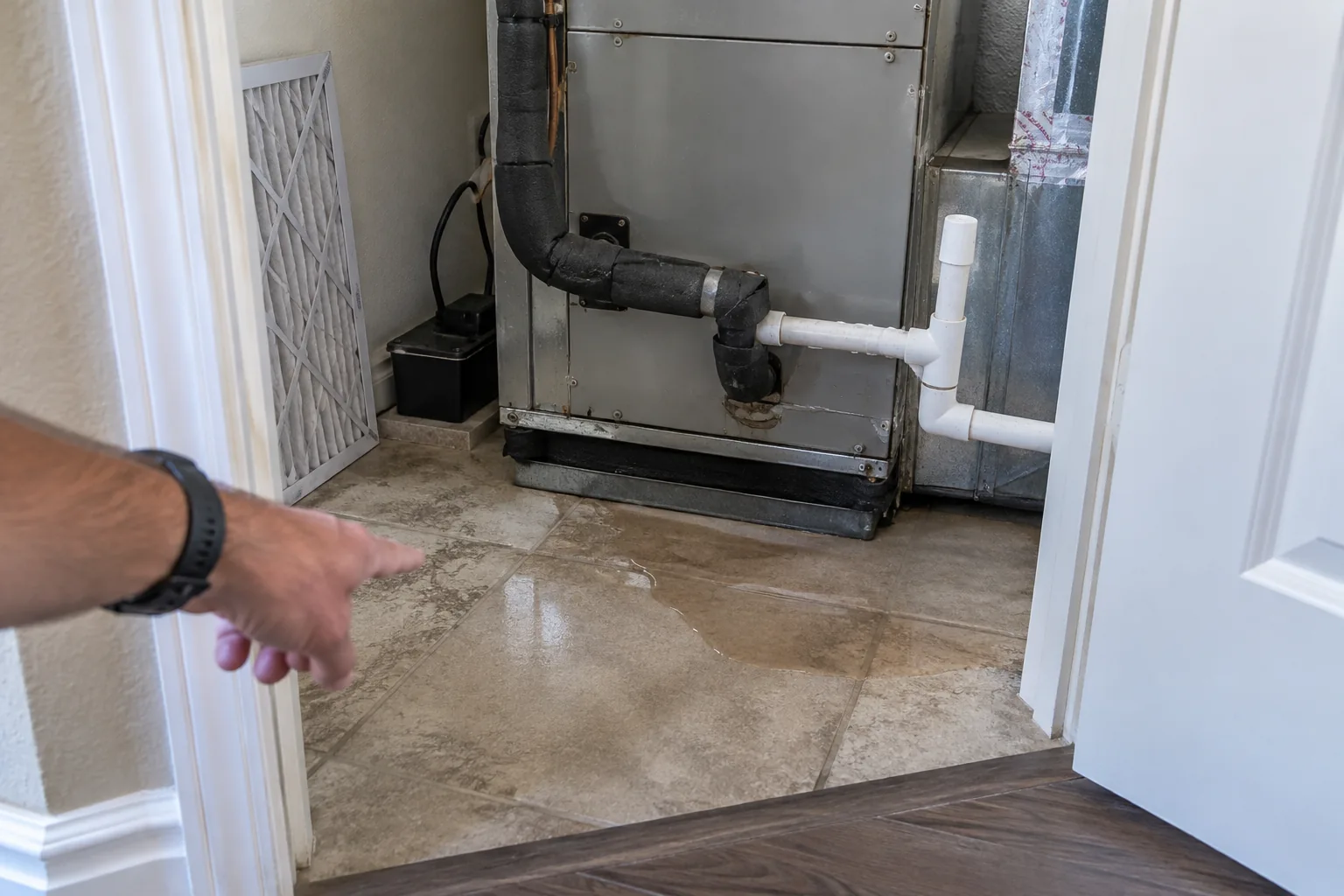
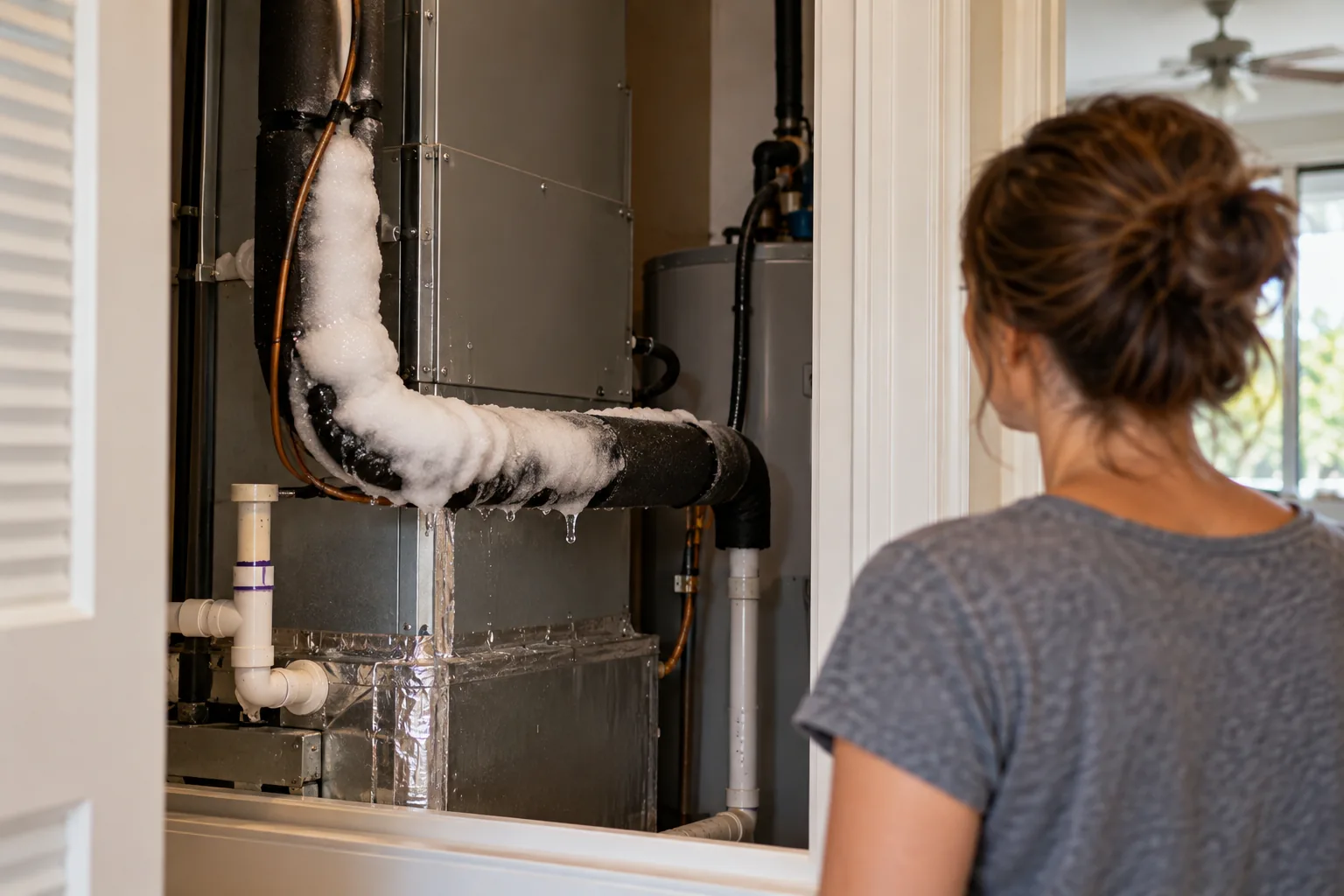
Ice during air-conditioning is a different observation from temporary frost on a heat pump’s outdoor unit during heating. Stop cooling when you see ice and allow the system to thaw according to its instructions. The cause could involve airflow or other system conditions; ice itself is not a diagnosis.
Three useful first checks
- 01Turn cooling off when ice is visible; do not chip ice away.
- 02Check only a safe, accessible filter and note airflow changes.
- 03Record where ice appeared and whether it returns after professional guidance.
What are you seeing?
Two kinds of visible frost
Use these branches to describe what you see. They are not a component diagnosis.
Ice on cooling line or indoor coil
Stop cooling, let it thaw and arrange a diagnosis.
Outdoor frost while heating
Use the heating guide to distinguish ordinary defrost behavior from lost heat.
Water after ice melts
Protect surfaces and use the indoor-water guide.
Observation route only. It does not identify a component or authorize a repair.
What the season and place can tell you
A hot day can make a frozen system especially uncomfortable, but forcing it to run is not a repair.
In winter, a heat pump may briefly defrost outdoor frost; do not confuse that with a frozen indoor cooling coil.
Explore the statewide region map ↗Where the homeowner checks end
Arrange a technician if ice appears, recurs, or comes with poor airflow or lost cooling. Refrigerant work requires qualified personnel.
Sources & review
Homeowner checks follow ENERGY STAR guidance. Texas regional context is drawn from National Weather Service climate records. A qualified Texas air conditioning and refrigeration contractor can be checked in the TDLR license search. Sources consulted September 2026. This is general homeowner guidance, not an equipment diagnosis.