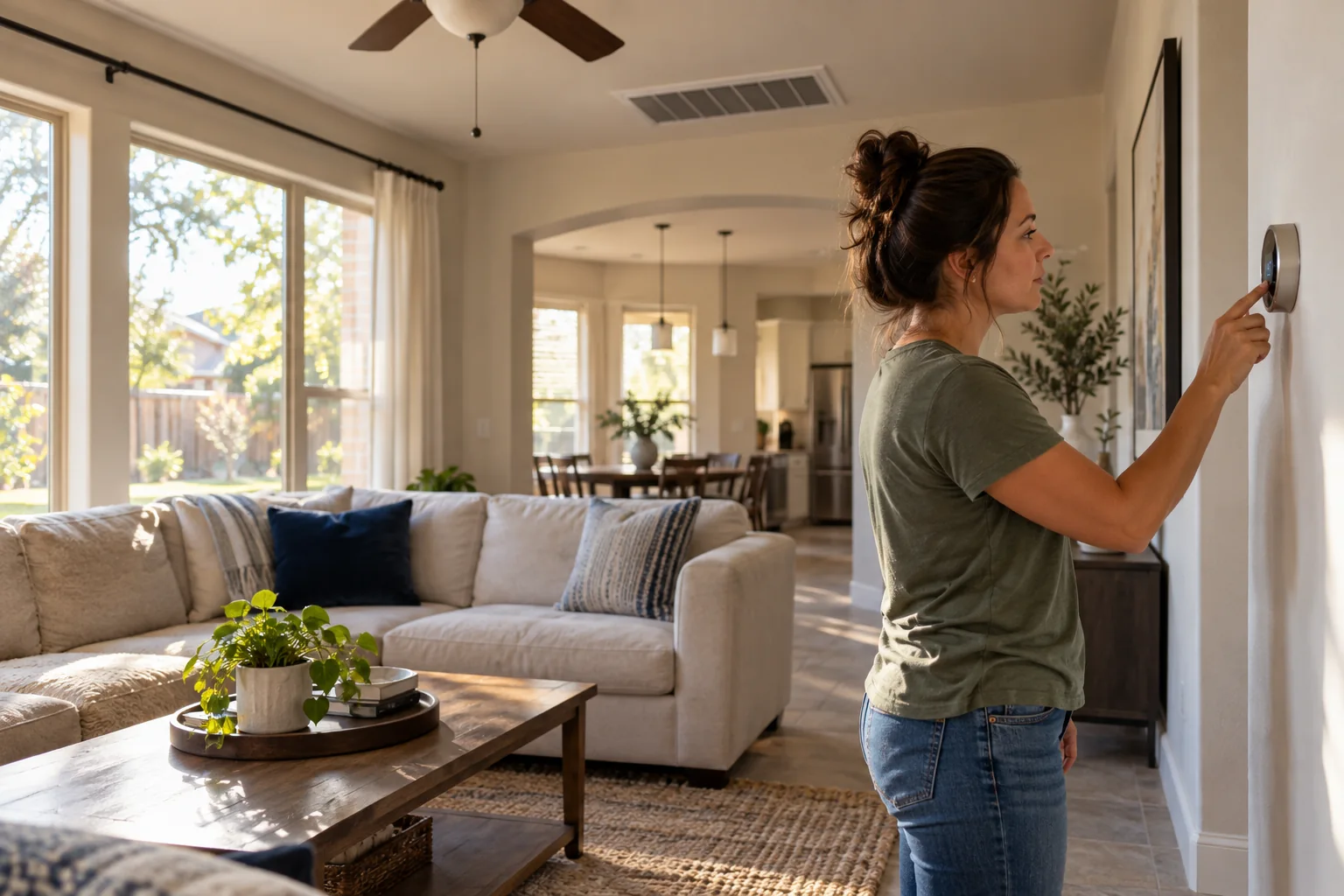
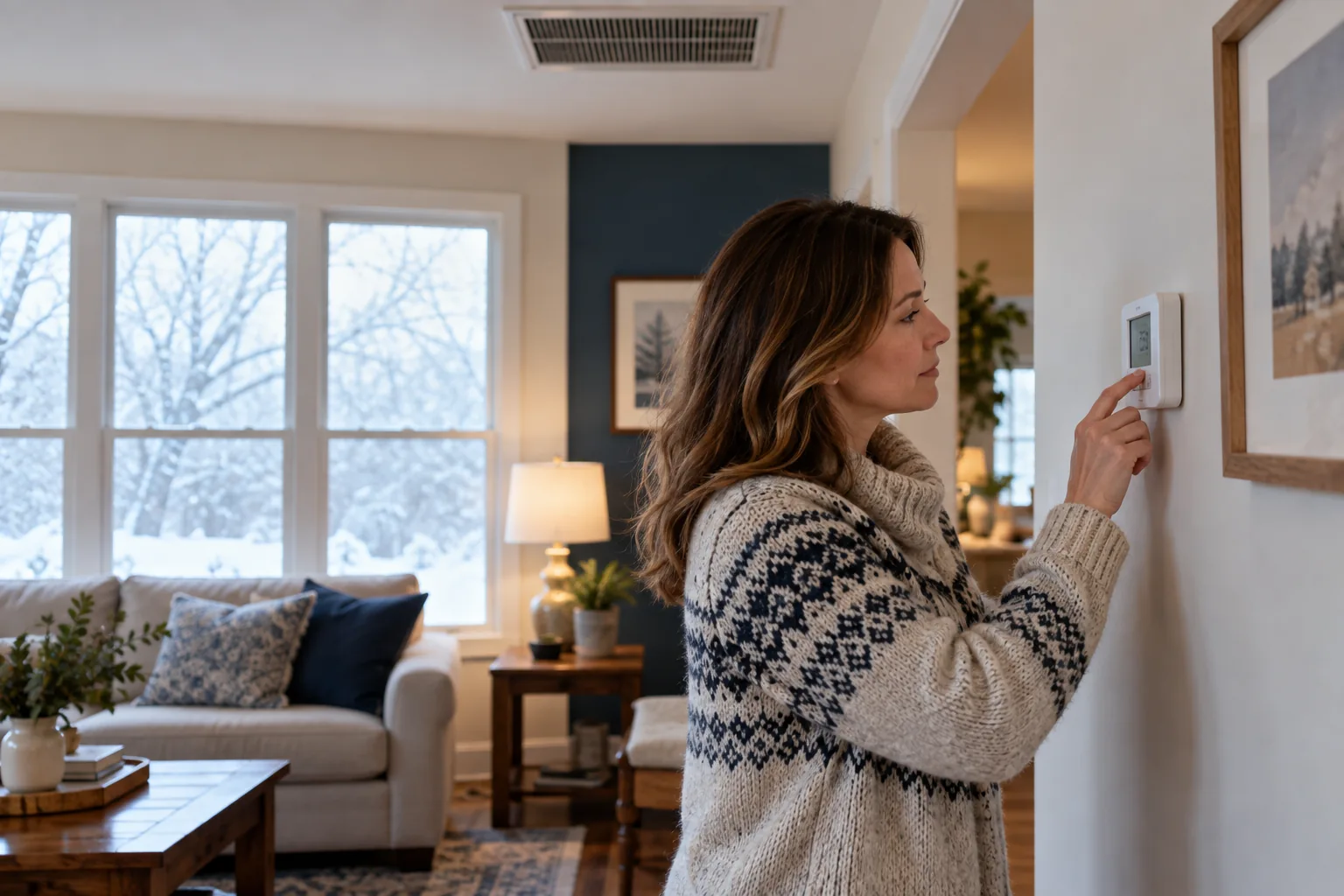
A running blower does not prove the heating side is working. Identify the system and the operating mode before troubleshooting. Heat pumps and gas furnaces have different normal behavior, especially during cold weather, so the next observation depends on which equipment you have.
Three useful first checks
- 01Set the thermostat to HEAT and note indoor temperature and set point.
- 02Identify the indoor/outdoor equipment without opening panels.
- 03Check an accessible filter and whether supply air becomes warmer over time.
What are you seeing?
Identify the heat source
Use these branches to describe what you see. They are not a component diagnosis.
Heat pump
Observe outdoor operation and whether AUX appears; read the AUX explainer.
Gas furnace
If you smell gas or a CO alarm sounds, leave and follow emergency instructions.
Unknown system
Use the system identification panel on the statewide page.
Observation route only. It does not identify a component or authorize a repair.
What the season and place can tell you
Panhandle and North Texas cold fronts make heating readiness a real statewide concern.
A heat pump may show AUX heat during very cold conditions or recovery from a large set point change; the label alone is not a failure.
Explore the statewide region map ↗Where the homeowner checks end
Call for sustained loss of heat, unusual sounds, repeated trips or any suspected combustion issue. Treat a CO alarm as an emergency.
Sources & review
Homeowner checks follow ENERGY STAR guidance. Texas regional context is drawn from National Weather Service climate records. A qualified Texas air conditioning and refrigeration contractor can be checked in the TDLR license search. Sources consulted September 2026. This is general homeowner guidance, not an equipment diagnosis.