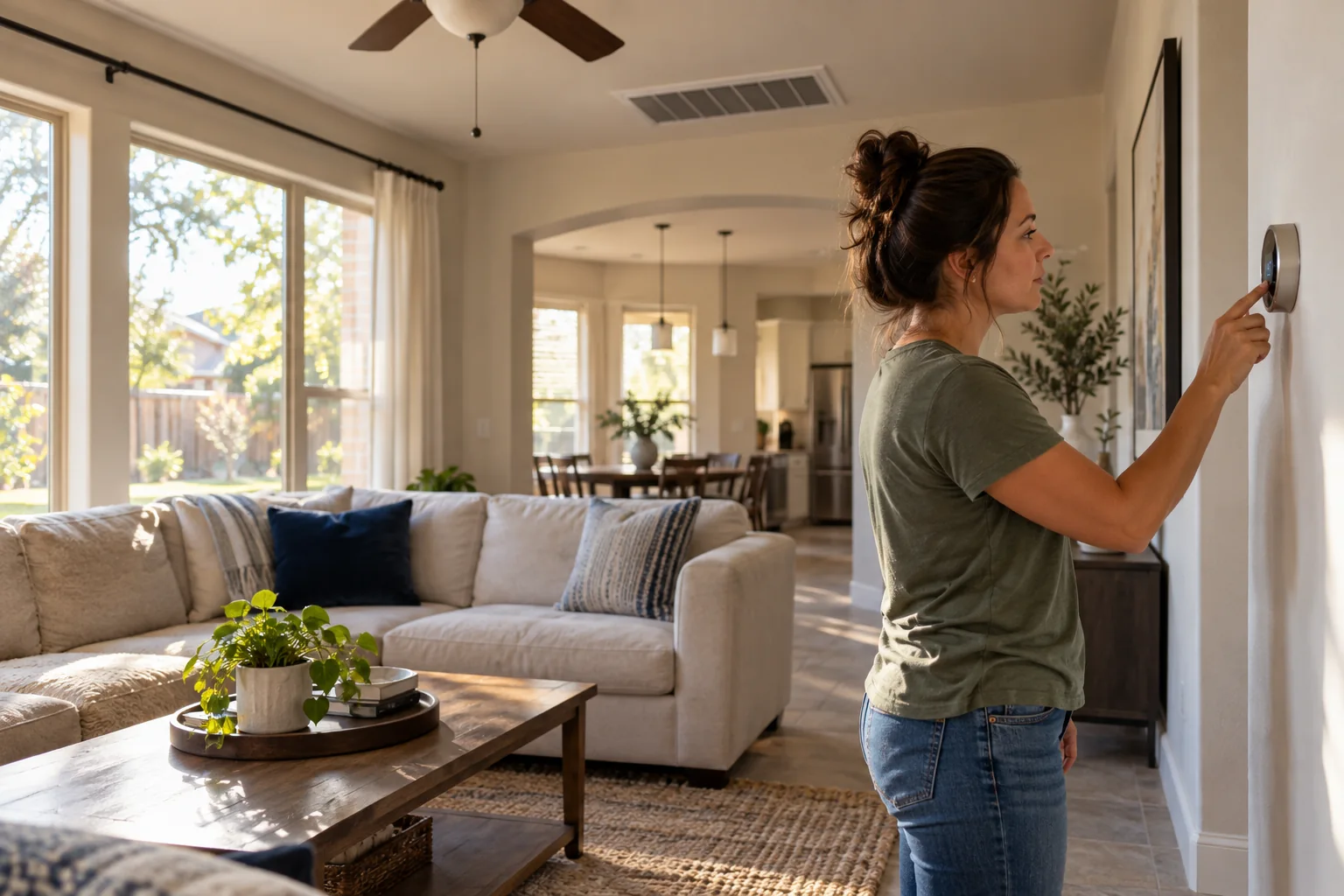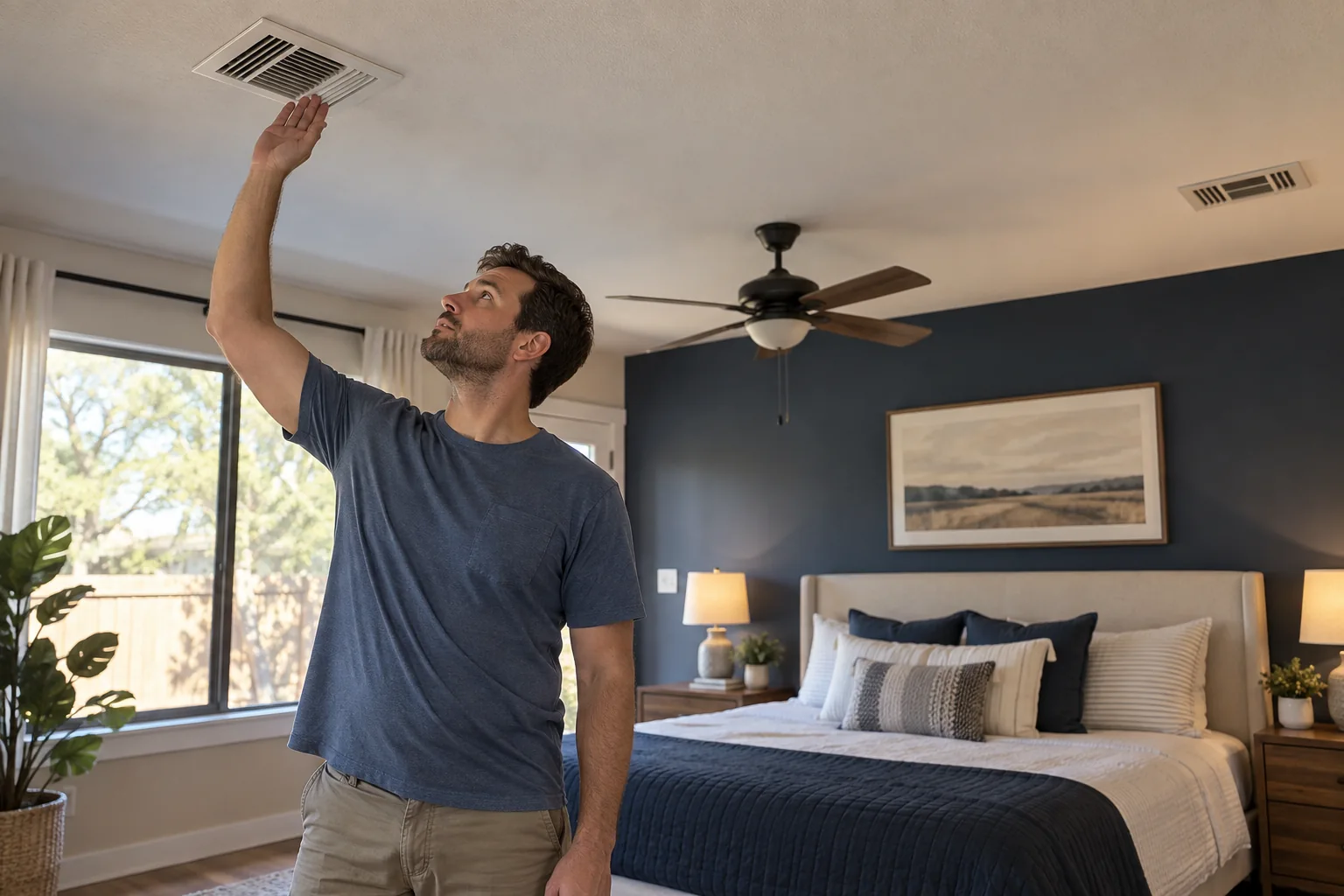
Make a simple room pattern before blaming the HVAC unit. Afternoon sun, windows, insulation, doors and duct delivery can each change how a room feels. Note whether the difference follows the sun, appears only when a door closes, or persists during both heating and cooling.
Three useful first checks
- 01Compare two rooms at the same time and record sun exposure.
- 02Check for blocked supply and return paths without changing ductwork.
- 03Note whether the issue happens in cooling, heating or both.
What are you seeing?
Make a room pattern
Use these branches to describe what you see. They are not a component diagnosis.
Afternoon pattern
Record window orientation, shading and room temperature.
Only with door closed
Note the return-air path and share it with a professional.
Across seasons
Ask for a whole-home airflow and envelope assessment.
Observation route only. It does not identify a component or authorize a repair.
What the season and place can tell you
A west-facing room in a Texas summer may experience different solar gain from a shaded room.
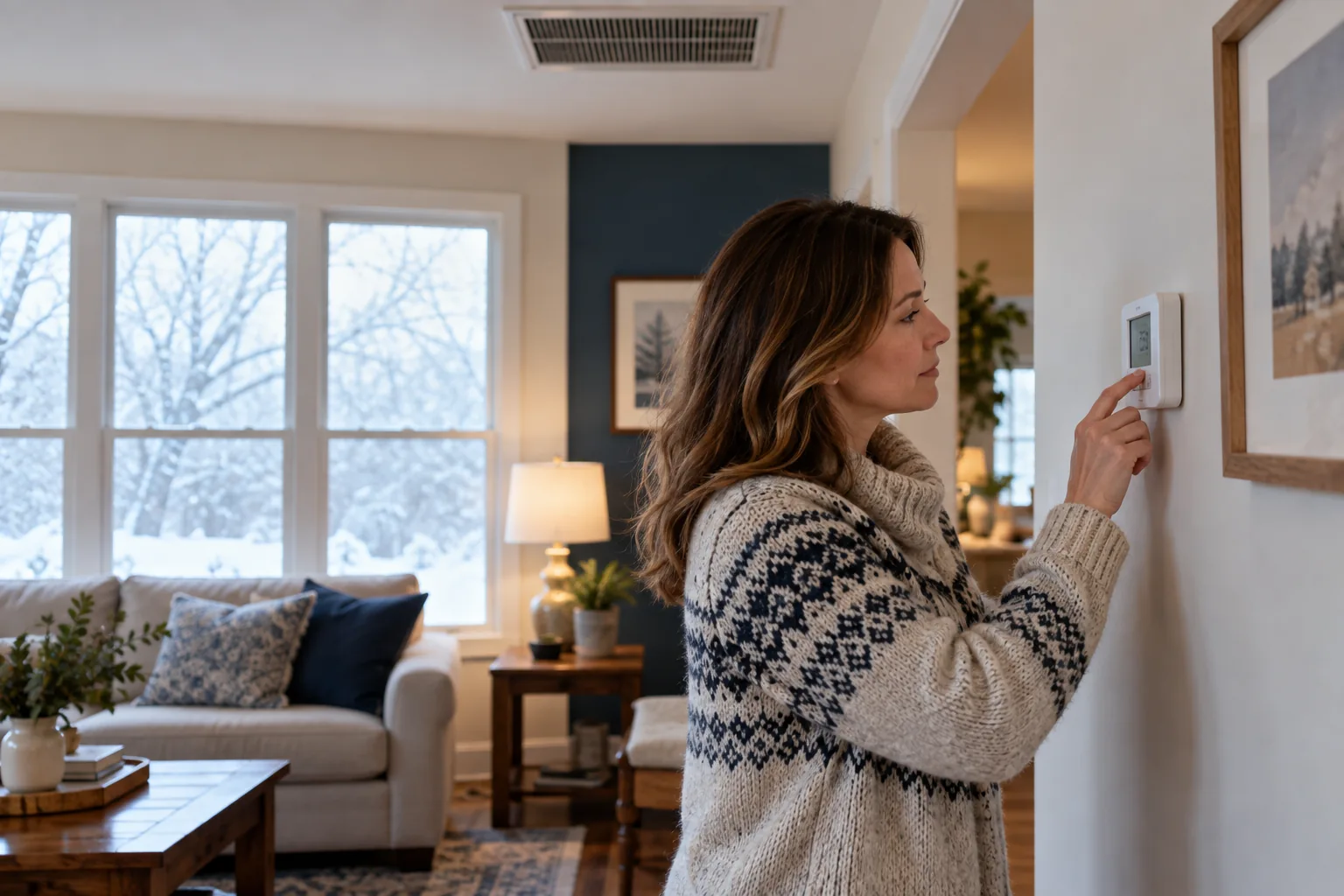
Cold fronts can reveal a separate winter pattern. The season and room position make the observation more useful.
Explore the statewide region map ↗Where the homeowner checks end
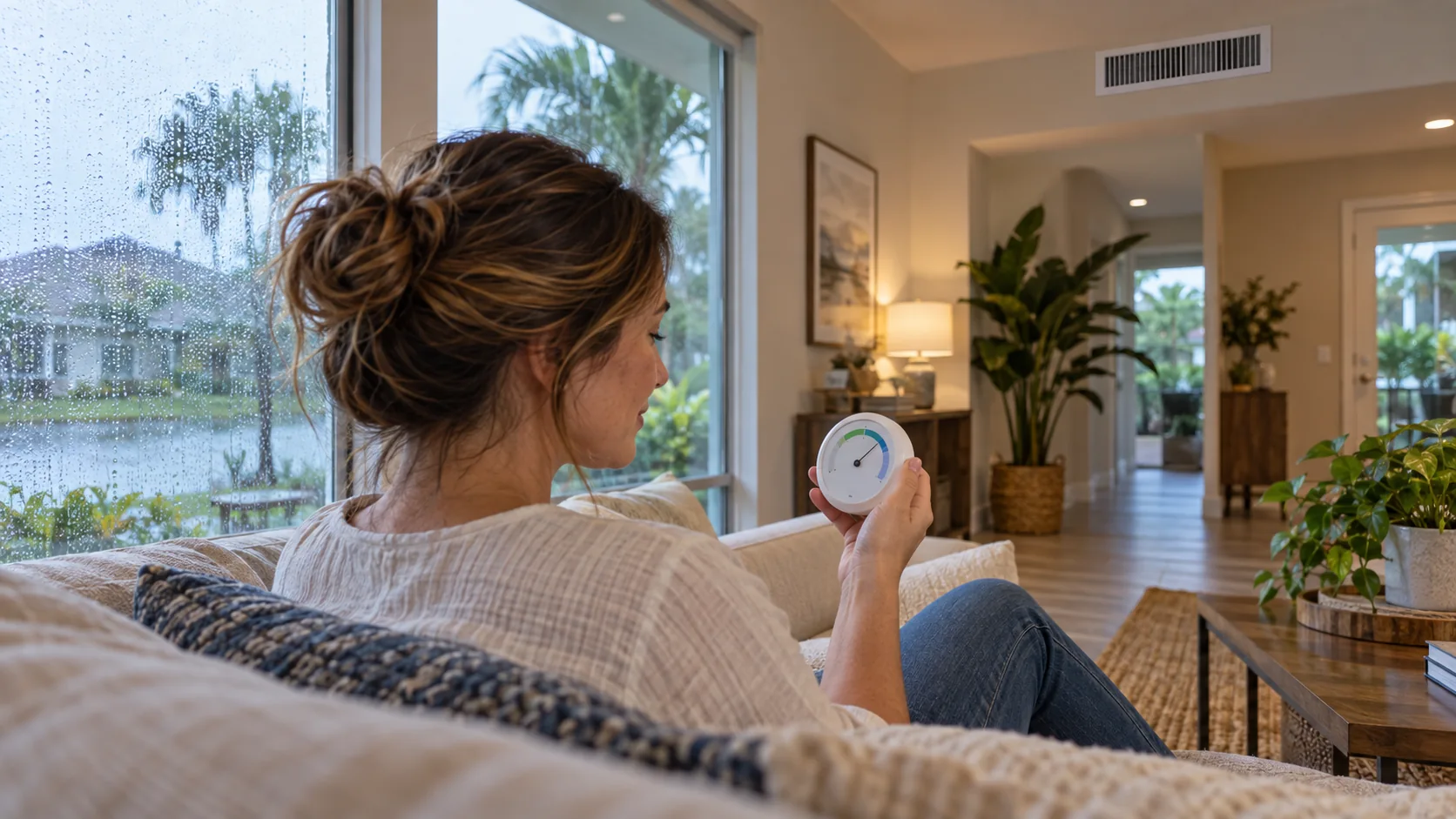
Seek help when the difference is persistent, large enough to affect comfort, or accompanied by weak airflow or moisture.
Sources & review
Homeowner checks follow ENERGY STAR guidance. Texas regional context is drawn from National Weather Service climate records. A qualified Texas air conditioning and refrigeration contractor can be checked in the TDLR license search. Sources consulted September 2026. This is general homeowner guidance, not an equipment diagnosis.