
Katy Faucet Sediment and Tankless Water Heater Problems
A Katy local explainer on white or tan faucet particles, tankless water heater sediment buildup, and the hot and cold checks that help narrow the source.
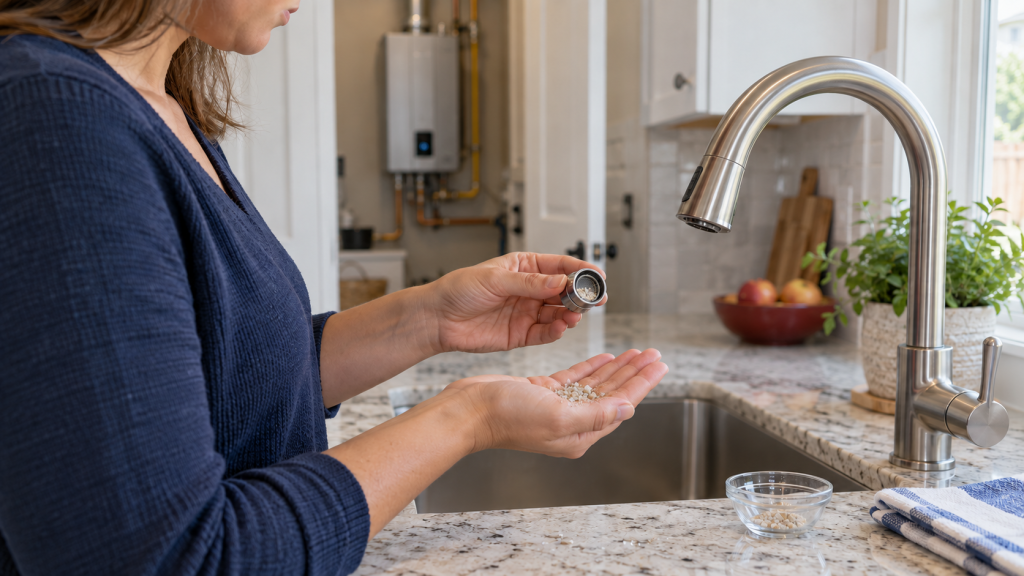
White or tan particles in a faucet aerator do not point to one cause. In Katy area homes, where the material appears is the most useful first clue. It may come from one fixture, the hot water system, or the incoming supply.
Loose heater scale can travel to hot water fixtures.
One faucet
Inspect the fixture.
Hot water only
Inspect the heater.
Hot and cold
Inspect the supply.
On this page
Can a tankless water heater send sediment to Katy faucets?
It can, especially when particles appear only with hot water. Mineral scale may form inside the unit and debris can collect at its inlet screen. Compare hot and cold water at several fixtures before deciding that the heater is responsible.
Where does the sediment appear?
Rinse one aerator, then test taps separately on cold and hot. The pattern helps narrow the next inspection.

Why the tankless heater moves higher on the list
Particles limited to hot taps make the heater more relevant. Rinnai advises periodic flushing for scale and lime. Rheem notes mineral heavy water may need more filter attention. Follow the exact model instructions.
One faucet and whole home sediment suggest different checks
One faucet points to the aerator or fixture. Particles at several hot and cold taps may involve plumbing work, aging pipe material, or the incoming supply. Katy addresses can use different providers, so confirm the utility.
What to record before requesting service
- Photograph the particles against a white surface.
- Note whether they feel gritty, waxy, metallic, or rubbery.
- Test hot and cold water at two or three fixtures.
- Check the heater model, service date, filter, and error history.
Does sediment always mean unsafe water?
No. Appearance alone cannot identify the material. Use the correct utility report and request testing when the concern continues.
Should the heater be descaled immediately?
Not without checking the model instructions and isolation valves. An incorrect procedure can damage equipment.
Get help when the pattern points beyond the aerator
If particles return, affect several hot taps, or arrive with pressure and temperature changes, a local plumber can inspect the heater, filters, valves, and nearby piping.
The hot and cold comparison is the useful first test
Hot water only keeps heater scale high on the list. One faucet points local. Hot and cold sediment calls for a broader review.