
How to Find a Sprinkler Leak in Your Texas Yard
A practical Texas homeowner guide to wet spots, leaking sprinkler heads, underground leak clues and a simple water meter check.
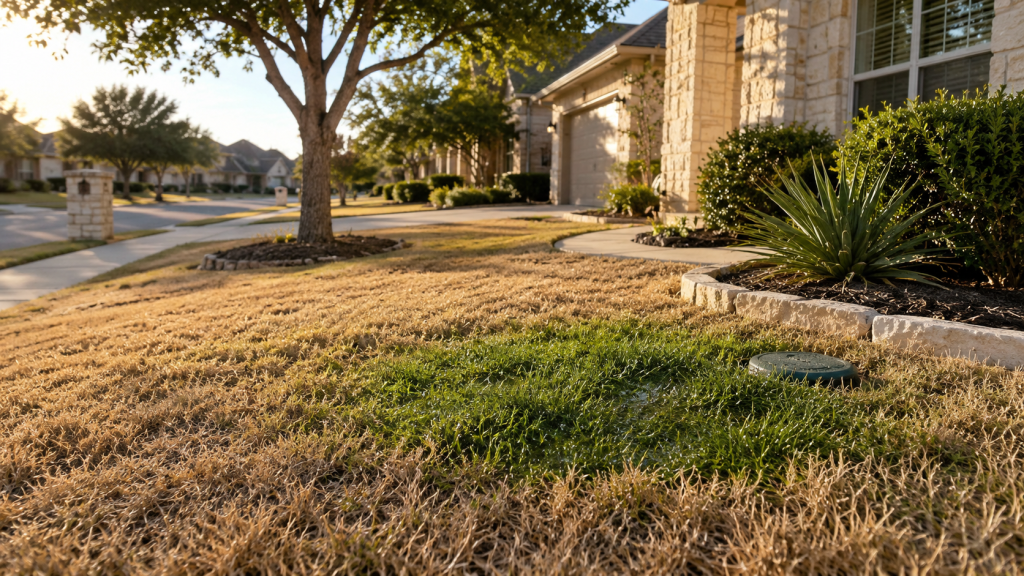
A greener patch of grass can look like the healthiest part of a Texas yard. Sometimes it is. Sometimes it is the first visible clue of a sprinkler system leak below the surface.
That matters in Texas, where irrigation often carries much of the workload during dry periods. A small irrigation leak can go unnoticed until the yard changes, a sprinkler head behaves differently, or the water bill begins to rise.
How to Tell If Your Sprinkler System Is Leaking
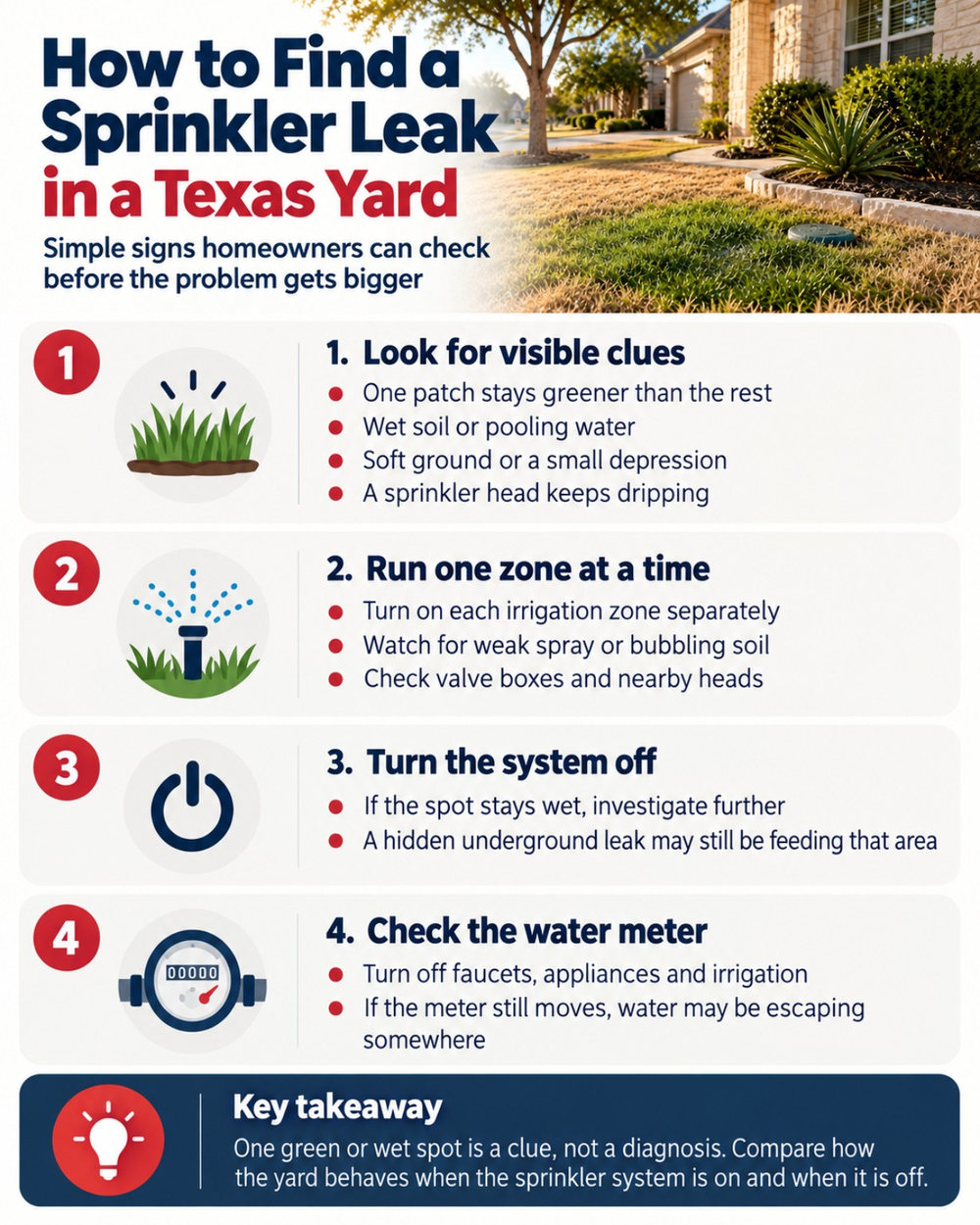
Start with what you can see. An unexplained wet spot, one patch staying greener than the surrounding grass, soft soil, pooling water, or a small depression can justify a closer look. EPA WaterSense notes that water pooling between irrigation cycles can be a sign of an underground leak.
A leaking sprinkler head is another useful clue. If water continues to seep after the system has stopped, the cause may be the head, a valve, drainage from the line, or another irrigation component.
These signs do not prove there is a leak. Uneven sprinkler coverage, runoff and differences in soil can create similar patterns.
How to Find a Leak in a Sprinkler System
For basic sprinkler leak detection, run each irrigation zone separately and walk the property while it operates.
Look for water surfacing where no sprinkler head is located, unusually weak spray, bubbling soil, damaged heads and wet valve boxes. An underground sprinkler leak may be easier to notice immediately after the affected zone has run.
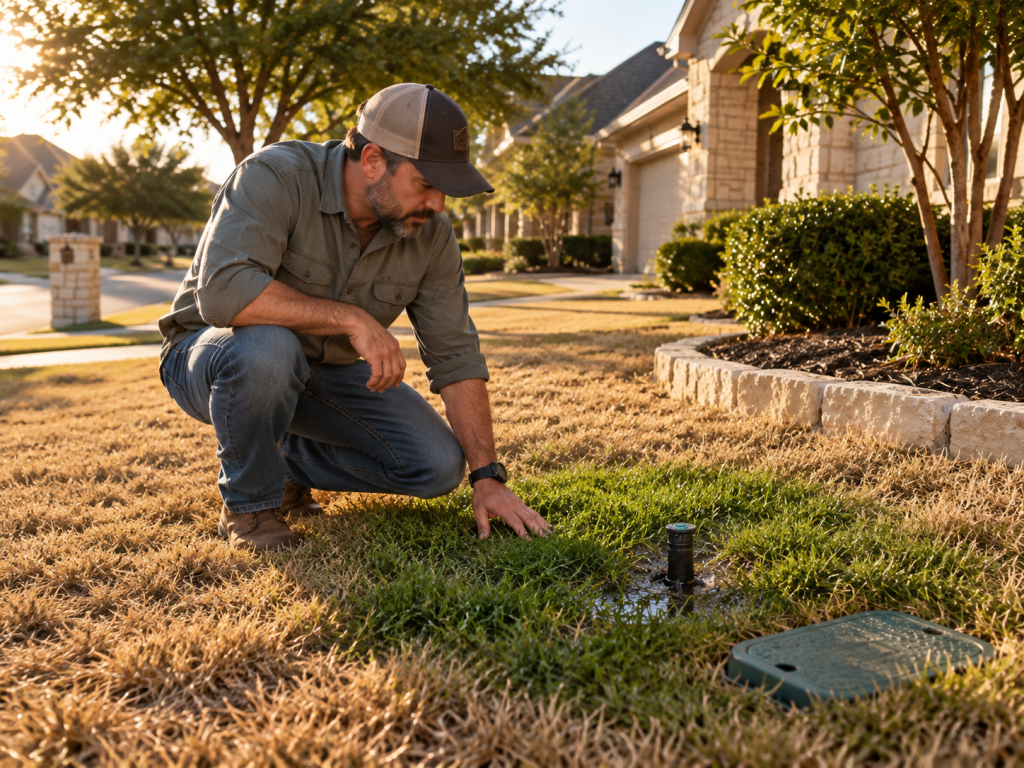
Then turn the system off. If the suspicious area remains wet or continues receiving water long after irrigation has stopped, it deserves further investigation.
Check the Water Meter Too
A water meter can help when the source is not obvious. Turn off faucets, appliances, irrigation and other known water use, then check whether the meter continues recording flow. Austin Water, for example, advises comparing meter readings during a period when no water is being used.
A high water bill with no visible leak does not automatically mean the sprinkler system is responsible. Toilets, service lines, outdoor faucets and other plumbing can also waste water.
One Green Spot Is a Clue, Not a Diagnosis
Texas yards vary widely, from North Texas clay to dry West Texas landscapes and humid Gulf Coast properties. The same symptom can have different causes.
The useful question is whether the unusual area behaves differently from the rest of the yard when the sprinkler system is on and when it is off. Finding that difference early can make a hidden water leak easier to investigate.
Sources reviewed
- EPA WaterSense, Sprinkler Spruce-Up, surface pooling between irrigation cycles can indicate an underground leak.
- Austin Water, Water Leaks, meter readings can be compared during a no-use period to help identify unexplained flow.
- Texas Water Development Board, A Watering Guide for Texas Landscapes, statewide context for efficient landscape irrigation.