When Does It Start Cooling Down in Texas?
A statewide homeowner explainer on why Texas fall weather can still feel like summer, when cooler conditions usually become more noticeable, and what longer-term warming means.
When does it start cooling down in Texas?
The calendar says fall has started in Texas. The thermometer has chosen not to participate.
There is no single statewide date. Texas is too large for one version of fall. The Panhandle can start feeling cooler well before Houston or the Rio Grande Valley. North Texas may get a pleasant cold front, then return to warm afternoons. Along the Gulf Coast, humidity can make Texas fall weather feel like summer with better marketing.
Why Texas Can Stay Warm After Fall Begins
By late September, stores are full of pumpkins, fall candles and sweaters. Outside, many Texans are still checking the AC, avoiding the afternoon sun and wondering whether the yard needs another drink.
So, when does it start cooling down in Texas? Astronomical fall usually begins around September 22 or 23, but that does not mean temperatures change overnight. In much of the state, September can still be hot. Cooler mornings and more regular cold fronts generally become more noticeable as October develops, while South Texas and the Gulf Coast can stay warm later.
That also explains a familiar question every year: why is it so hot in Texas during fall?
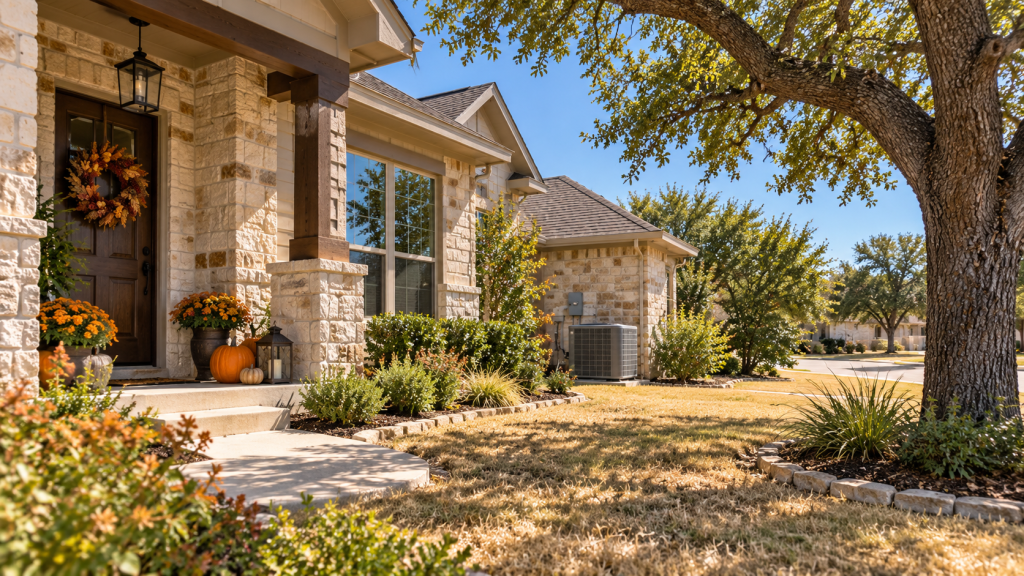
For homeowners, the answer matters beyond deciding between shorts and a sweater. Air conditioners may continue working hard. Lawns and newly planted trees can still lose moisture. Irrigation should follow actual soil and weather conditions rather than the month printed on the calendar.
The pumpkins can stay on the porch. The sweater can stay nearby. Just do not be surprised if the AC is still doing most of the seasonal work.
What Texas Climate Change Means Here
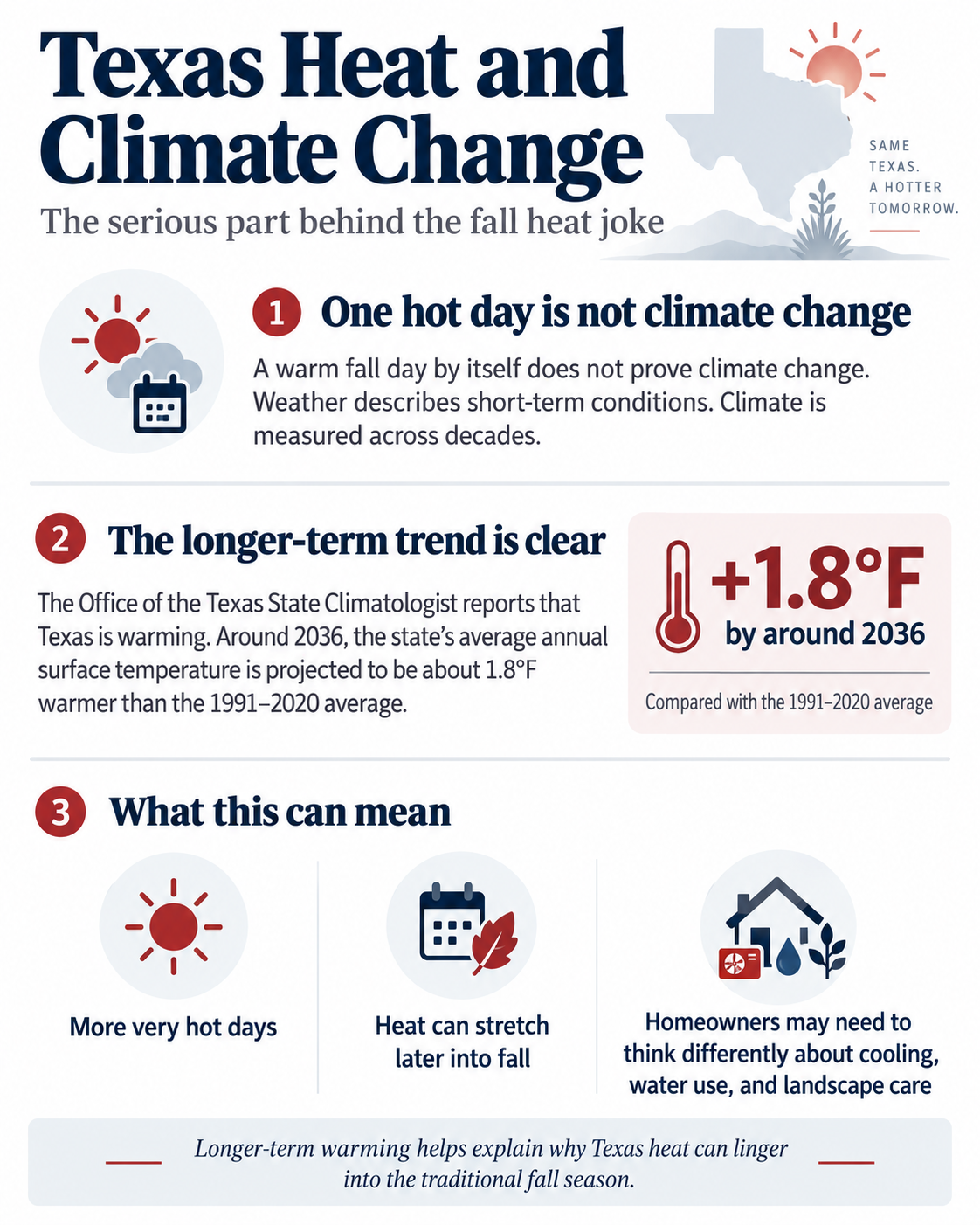
A warm September day by itself does not prove climate change. Weather describes short-term conditions, while climate is measured across decades.
The longer-term Texas trend is clear. The Office of the Texas State Climatologist reports that Texas has been warming and projects the state’s average annual surface temperature around 2036 to be about 1.8°F warmer than the 1991–2020 average. The same assessment projects more very hot days.
That does not mean every Texas fall will be hot. Longer-term warming can, however, affect how often heat extends into the traditional fall season and how homeowners plan for cooling, water use and landscape care.