
Water Under Your Sink? What to Check First
Water under a sink can come from a supply line, shutoff valve, faucet connection, drain fitting, P-trap, garbage disposal, or another nearby source. Notice when the water appears and where fresh moisture first forms before deciding what to do next.
 Plumbing
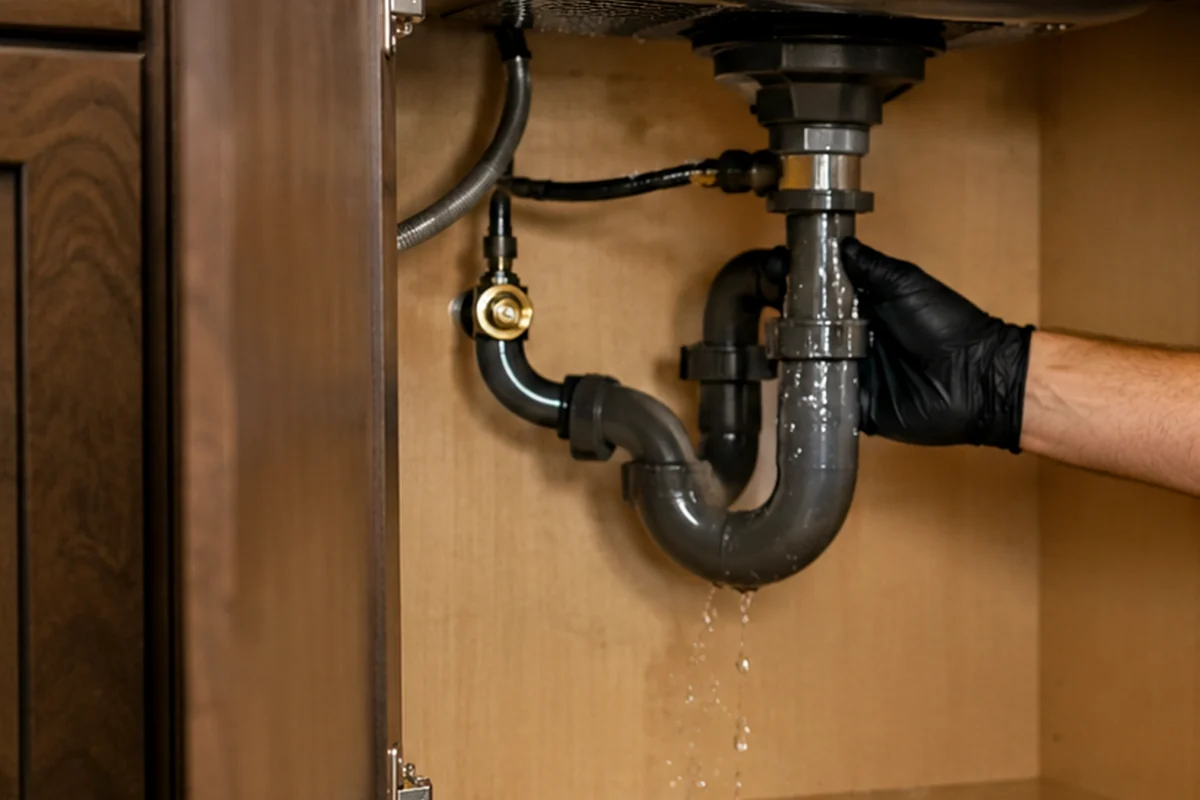
Water under a kitchen or bathroom sink can come from several places, including a supply line, shutoff valve, faucet connection, drain fitting, P-trap, garbage disposal, or water splashing from above. A useful first step is to notice whether the moisture appears only when the faucet or drain is being used, or whether it continues even when the sink is off.
Dry the area first, then watch for where fresh moisture appears. Avoid touching electrical components or using nearby electrical appliances if water is present. If water is spreading quickly, stop using the sink and, if you can do so safely, turn off the fixture’s water supply until the source can be assessed.
What You Can Check
These are basic observations or simple checks. If anything feels unsafe or uncertain, stop and seek appropriate professional help.
- Dry the cabinet floor, pipes, and fittings so fresh moisture is easier to spot.
- Check whether water appears while the faucet is running, while the sink is draining, or even when the sink is not being used.
- Look for visible droplets around supply lines, shutoff valves, faucet connections, the drain assembly, and P-trap.
- Check whether water may be coming from a spill, condensation, dishwasher connection, or garbage disposal area.
- Use a towel or small container to limit a minor drip while you identify the source.
- If water is actively leaking and you can do so safely, close the sink’s shutoff valves and stop using the fixture.
Warning Signs
- Water is spreading quickly or continues even when the sink is not being used.
- Water is near an electrical outlet, garbage disposal wiring, appliance connection, or other electrical component.
- The cabinet, flooring, wall, or ceiling below the sink is becoming swollen, soft, stained, or wet.
- You notice sewage-like odors, dirty wastewater, or water backing up from the drain.
- The area repeatedly becomes damp or has a persistent musty odor.
- You cannot stop the water safely or a shutoff valve appears damaged or does not work.
When Professional Help May Make Sense
Professional help may be appropriate when the source of the leak is unclear, the leak continues after the fixture is no longer being used, a valve or fitting is damaged, or moisture has reached cabinets, flooring, walls, electrical components, or the area below. Recurring leaks can also indicate a problem that needs more than a temporary adjustment.
Call for Plumbing Help
If this issue needs professional attention, use the matching Plumbing connection below.
Call for Plumbing HelpConnection availability can vary by location, routing availability, campaign conditions, and provider participation.What to Have Ready Before You Call
- Whether the leak happens constantly or only when the faucet or drain is used
- Where you first see fresh water or moisture
- Whether the water appears to be hot, cold, or drain water
- Whether the sink has a garbage disposal or nearby dishwasher connection
- Any unusual odor, sound, clog, or slow-drain issue
- Whether the sink shutoff valves can be closed normally
- A clear photo or short video of the leaking area, if safe to take