
Slow Drains
Learn why your drains are slow and how to narrow the cause safely before it gets worse.
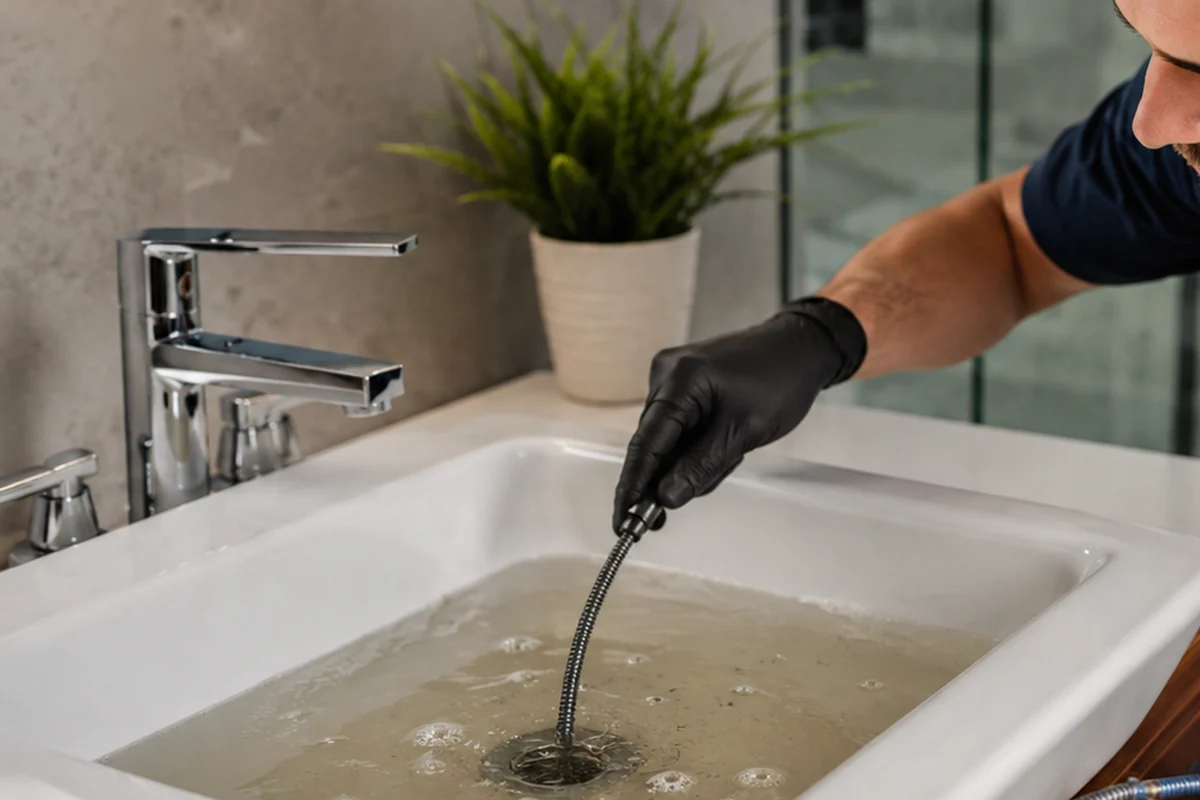
Quick Answer
A single slow drain and several slow drains point to different parts of the plumbing system. Start by identifying the scope. One sink or shower can be a local restriction. Several fixtures, recurring gurgling, odor, or wastewater backup can justify a broader drain or sewer-line check.
On This Page
Key Facts
One or several?
Scope is the first diagnostic split.
Occasional or recurring?
A recurring pattern can matter more than one slow event.
Gurgling or backup?
Wastewater backup is a stop condition, not a DIY experiment.
Chemical safety
Never mix drain cleaners or household cleaning chemicals.
Where is the drain slow?
One Fixture
One sink, tub, or shower.
Several Fixtures
Multiple drains in the home.
Do Not Mix Drain Chemicals
Mixing drain cleaners or household chemicals can create dangerous heat, splashing, or toxic gases. If a chemical product has already been used, tell the plumber before work begins.
Common Causes
What This Problem May Mean
Hair, soap residue, food debris, grease, or a restriction farther in the drain line can reduce flow.
What You Can Check
When to Stop
- Multiple drains back up together.
- Sewage odor or wastewater backup.
- Water appears in another fixture when draining.
When Professional Help May Make Sense
If several fixtures are affected, the drain repeatedly clogs, or wastewater backs up, professional plumbing help may be appropriate.
Need location-specific context?
Provider boundaries, utility rules, weather, and local water conditions can change the next step. Use the statewide and area guides only when location actually changes the decision.
What to Have Ready Before You Call
Sources Used
How this guide was prepared
HomeService Path separates general homeowner observations from provider-specific or property-specific evidence. The page does not diagnose a specific home, promise a repair outcome, or replace current utility instructions, manufacturer guidance, or professional inspection.