Why Your December–February Water Use Can Affect Your Princeton Sewer Bill Later
Princeton uses December–February water use to help set future sewer charges. Learn how WQA, hidden leaks, running toilets and MyWaterAdvisor fit in.
Princeton, Texas · Local Explainer
Princeton’s winter averaging period can turn a quiet toilet leak or hidden plumbing problem into more than one unusually high water bill.
Call to Connect With a Local Plumber (866) 505-0467Quick Answer
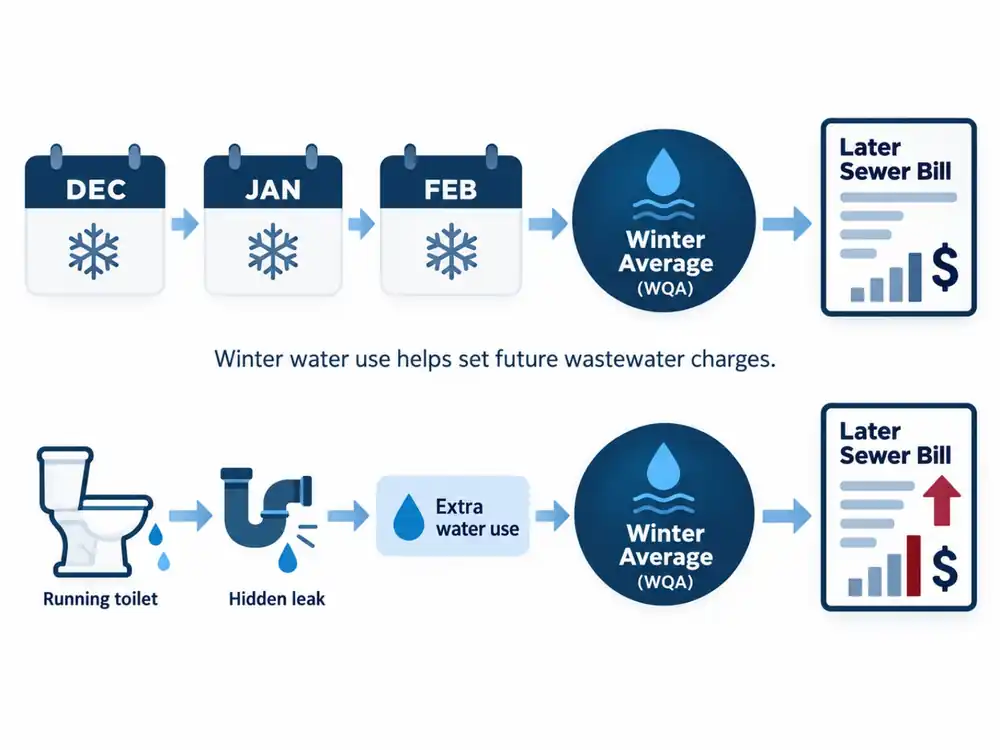
For eligible Princeton residential customers, water use in December, January and February helps determine something that matters well beyond winter: the wastewater portion of future utility bills.
The City uses those three months to calculate a Winter Quarter Average, or WQA. That average is then used for wastewater billing until the next winter average is established.
Why Princeton Uses a Winter Average
Homes do not have a separate meter measuring how much wastewater leaves the property.
Instead, Princeton uses winter water consumption as an estimate of normal indoor use, when lawn watering, pool filling and other outdoor water use is generally lower. The City reinstated WQA in January 2026, with the change taking effect on April 2026 bills.
That makes December through February worth watching closely.
A high summer water bill may be temporary. Extra water use during Princeton’s winter averaging period can become part of the figure used to calculate sewer charges for months afterward.
The Leak You Do Not Hear Still Counts
A running toilet is a good example.
Princeton specifically warns homeowners that toilets can leak silently. EPA data also shows that even a relatively small toilet leak can waste hundreds of gallons in a month.
A worn toilet flapper, faulty fill valve, dripping fixture or hidden supply-line leak may therefore do more than increase one water bill during winter. If it raises your December, January or February consumption, that usage can also affect your WQA.
Watch the Usage Before the Bill Arrives
Princeton provides residential customers with MyWaterAdvisor 2.0, which can show water-use activity and provide leak notifications. Instead of waiting for an unusually high bill, homeowners can watch for unexpected or continuous consumption during the winter averaging period.
Check toilets, faucets, hose bibs and visible supply lines. Pay particular attention to water use overnight or when nobody should be using water.
If you notice an unexplained spike, address it quickly and keep records of the repair. The City also lists a Water Adjustment Form for leak-related situations, although homeowners should confirm directly with Utility Billing how their individual account and winter average will be handled.
If water use continues when everything appears to be off, a plumber can help trace the source before a hidden leak becomes a larger repair and a longer-term billing problem.
Still seeing water use when everything looks off?
A local plumber can help identify a running toilet, supply-line problem or hidden leak before it turns into a larger repair and a longer-term billing issue.
Call to Connect With a Local Plumber (866) 505-0467